
Understanding the Essentials of Logistics in Modern Supply Chains
Logistics forms the backbone of global trade, ensuring that goods move efficiently from producers to consumers. In today's interconnected world, effective logistics management is crucial for businesses aiming to stay competitive. This involves coordinating transportation, warehousing, and inventory control to minimize costs and maximize speed. For instance, advancements in logistics have enabled companies to handle massive volumes of cargo, from shipping containers across oceans to airlifting humanitarian aid.
The Role of Heavy-Duty Aircraft in Logistics Operations
Heavy-duty aircraft represent a pinnacle of logistics innovation, designed for transporting large payloads over long distances. These planes, equipped with powerful jet engines and expansive wings, can carry military equipment, vehicles, and essential supplies with remarkable efficiency. Their aerodynamic design reduces fuel consumption, making them ideal for rapid-response missions in diverse environments, from arid deserts to frozen landscapes. Such aircraft not only support defense logistics but also play a vital role in global humanitarian efforts, delivering aid swiftly where it's needed most. The integration of cutting-edge technology in these vessels ensures reliability, turning logistics challenges into seamless operations.
Revolutionizing Port and Yard Efficiency with Container Reach Stackers
In the realm of ground-based logistics, container reach stackers are transforming how ports and distribution centers operate. These robust machines excel at lifting and stacking 20-foot and 40-foot shipping containers, optimizing space in crowded yards. With telescopic arms that reach impressive heights, they allow for precise vertical storage, crucial for high-volume logistics hubs. Mounted on durable chassis with oversized tires, reach stackers navigate uneven terrain effortlessly, enhancing mobility in freight yards. Modern models incorporate eco-friendly engines, reducing emissions while maintaining high performance. Collaborations with giants like Maersk highlight their versatility in handling diverse container operations, boosting turnaround times and overall logistics efficiency.
Maritime Logistics: The Power of Ultra-Large Container Vessels
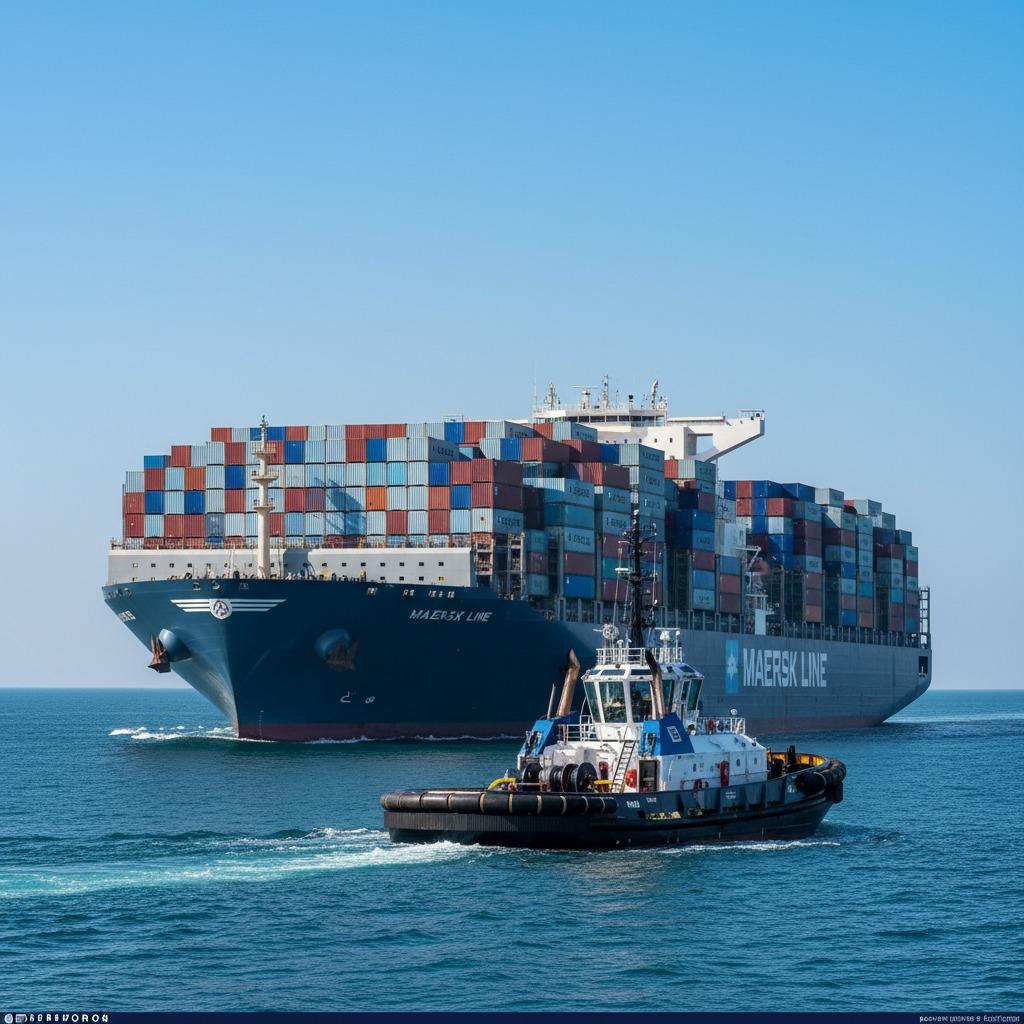
Maritime logistics dominates international trade, with ultra-large container vessels serving as floating hubs for global commerce. These ships, like those from Maersk Line, boast immense cargo capacity, stacking thousands of TEUs in optimized configurations. Their sleek hulls and powerful propulsion systems ensure stability and fuel efficiency across transoceanic routes, carrying everything from electronics to perishable goods. The elevated bridge provides superior visibility and control, integrating advanced navigation for precise operations. By consolidating shipments, these vessels lower costs and accelerate supply chains, supporting economies worldwide. The sight of a tug assisting in port maneuvers underscores the coordinated logistics required for safe, efficient docking in busy harbors.
Integrating Air, Land, and Sea for Comprehensive Logistics Solutions
Effective logistics demands seamless integration across air, land, and sea transport modes. Aircraft handle urgent, high-value shipments; reach stackers streamline ground handling; and massive vessels manage bulk international flows. This multimodal approach minimizes delays and optimizes resource use, adapting to the demands of e-commerce, manufacturing, and global shipping. Statistics show that efficient logistics can reduce supply chain costs by up to 15%, enhancing profitability. As technology evolves, from digital tracking to automated machinery, the logistics sector continues to redefine possibilities, ensuring goods reach destinations reliably and sustainably.
Future Trends Shaping the Logistics Landscape
Looking ahead, logistics is poised for further transformation through automation, AI, and sustainable practices. Electric reach stackers and hybrid vessels are emerging to cut carbon footprints, while data analytics predict demand and route disruptions. For businesses, investing in robust logistics infrastructure means gaining a competitive edge in a fast-paced market. Whether managing regional freight or international networks, mastering logistics ensures operational resilience and growth.





