
Revolutionizing Global Trade: The Power of Modern Logistics
In today's fast-paced world, logistics stands as the backbone of global commerce, ensuring that goods move seamlessly from origin to destination. This intricate network of transportation and supply chain management not only drives economic growth but also connects businesses and consumers like never before. By harnessing innovative technologies and integrated systems, logistics is transforming industries, reducing costs, and promoting sustainability. If you're looking to optimize your operations, embracing advanced logistics solutions can be the game-changer your business needs.
The Synergy of Air and Sea in Logistics Excellence
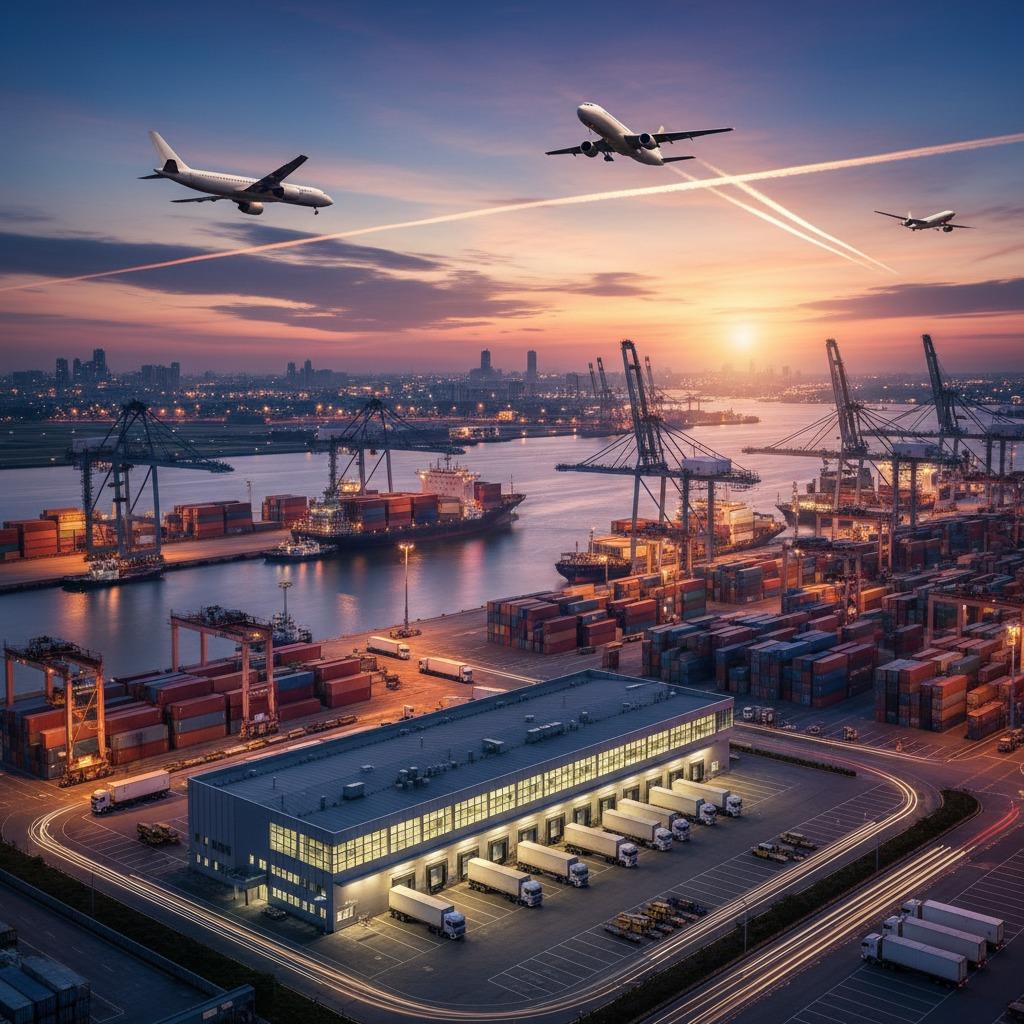
Imagine the stunning fusion of air and sea transport, where an advanced commercial aircraft glides through a vibrant sunset sky, its blue and red hues symbolizing efficiency and eco-friendliness. Below, a bustling port hums with state-of-the-art cranes loading streamlined cargo ships designed for swift, sustainable maritime logistics. This synergy isn't just visually captivating; it's a practical blueprint for modern logistics. Air transport delivers time-sensitive goods with speed, while sea routes handle bulk cargo with reliability, minimizing environmental impact through fuel-efficient designs. Businesses that integrate these modes can achieve unparalleled connectivity, ensuring products reach markets faster and more affordably. Adopting such logistics strategies persuades companies to rethink their supply chains, proving that multimodal transport is essential for staying competitive in global trade.
Building the Ultimate Logistics Hub for Seamless Operations
At the core of revolutionary logistics is the state-of-the-art hub that masterfully blends air, land, and sea transport. This sprawling distribution center features multiple loading bays where trucks from top logistics firms position for rapid cargo processing. Adjacent to it, a vibrant shipping port teems with large vessels and towering cranes, orchestrating the efficient transfer of organized containers across oceans. Overhead, airplanes ensure quick delivery of urgent shipments, while a modern rail system encircles the facility, providing flexible options for inland transport. The illuminated central building acts as the operational nerve center, powered by cutting-edge technology for real-time monitoring. This integrated logistics ecosystem doesn't just handle high volumes; it drives economic growth by streamlining workflows and reducing delays. Convincing evidence from such hubs shows that investing in comprehensive infrastructure yields measurable returns, urging businesses to prioritize logistics hubs for their scalability and efficiency.
Embracing Automation in Logistics for a Sustainable Future
The future of logistics shines brightest in the Automated Shipping Terminal, where AI and robotics redefine cargo handling. High-capacity cranes with precision tech swiftly load and unload containers, coordinated by autonomous trucks and robotic arms that boost throughput while slashing downtime. Operating 24/7, this terminal leverages smart grids for energy efficiency and incorporates sustainable practices to lessen its carbon footprint. Real-time tracking and enhanced security features provide full visibility and protection for valuable goods, making logistics more reliable than ever. By elevating operations with these innovations, companies can set new benchmarks in trade efficiency. The persuasive case for automation is clear: it not only accelerates delivery speeds but also cuts costs and supports environmental goals, compelling forward-thinking enterprises to integrate these systems immediately.
In conclusion, logistics is more than a service—it's a strategic imperative that propels global trade forward. From the harmonious blend of air and sea to automated terminals and integrated hubs, these advancements offer undeniable benefits. Don't lag behind; embrace logistics today to unlock efficiency, sustainability, and growth for your business.





