
Understanding Logistics in Modern Transportation
The realm of logistics forms the backbone of global trade and military operations, ensuring that goods, personnel, and equipment move efficiently across vast distances. In today's interconnected world, logistics encompasses everything from aerial transport in defense scenarios to maritime shipping and ground-based cargo handling. As businesses and governments strive for seamless supply chains, the integration of advanced technologies in logistics has become paramount. This article explores key elements of logistics, drawing on real-world examples to highlight its critical role in efficiency and reliability.
Aerial Logistics: Powering Military and Humanitarian Missions
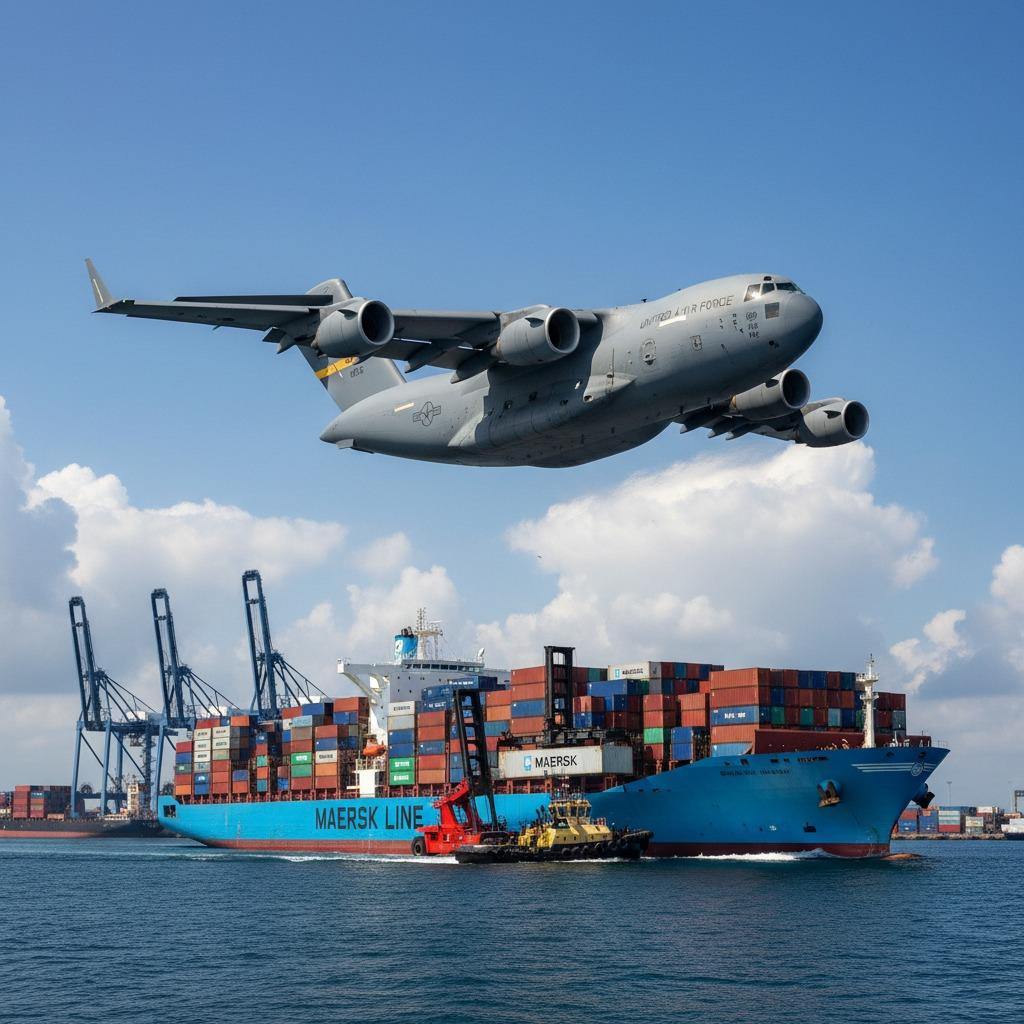
In military aviation, logistics takes on a strategic dimension with aircraft designed for heavy-lift capabilities. Consider the strategic transport aircraft in the China Air Force fleet, a marvel engineered for aerial logistics. This large cargo plane boasts an impressive payload capacity, capable of ferrying troops, tanks, armored vehicles, and humanitarian supplies over long ranges. Powered by four advanced turbofan engines, it delivers exceptional thrust and reliability, even in demanding conditions. Its aerodynamic structure optimizes fuel efficiency, while high-altitude operation ensures versatility across diverse terrains. Such aircraft exemplify how logistics supports defense operations and disaster relief, turning potential chaos into coordinated action. The embedded national identity on its vertical stabilizer underscores the pride and strength inherent in these logistics assets, making them symbols of technological prowess.
Ground-Based Logistics: Efficiency in Container Handling
Shifting to terrestrial operations, logistics thrives through specialized equipment like the high-performance container reach stacker, a staple in modern ports and freight yards. This machine revolutionizes cargo handling with its articulated telescopic boom, enabling precise lifting and stacking of standard shipping containers, such as those from MAERSK. Its low-slung red chassis and oversized tires provide stability for heavy loads, while the elevated cabin offers superior visibility for operators navigating busy terminals. In intermodal logistics hubs, this reach stacker enhances yard space utilization, speeds up turnaround times, and supports seamless transitions between trucks, rails, and ports. By bridging power and agility, it minimizes handling time and boosts throughput, proving indispensable in the fast-paced world of global commerce. Logistics here isn't just about movement; it's about precision that keeps supply chains flowing without interruption.
Maritime Logistics: Scaling Global Trade
At the heart of international freight, maritime logistics dominates with ultra-large container vessels like the Maersk Line ships, icons of efficiency on major trade routes. These behemoths feature a light-blue hull and commanding superstructure, optimized for high-volume transport of standardized cargo. Their broad beam and hydrodynamic bow support massive deck and hold capacities, stacking containers in a meticulously calculated grid that maximizes space while ensuring balance and safety. The high bridge provides forward visibility over towering stacks, and twin exhausts power long-haul voyages carrying everything from consumer goods to industrial machinery. In port, tugboat assistance highlights the coordinated ecosystem of logistics, where precision maneuvering meets monumental scale. This vessel reduces per-unit costs and streamlines customs and distribution, embodying how logistics fosters global connectivity. With strong brand presence through oversized lettering, it stands as a floating testament to reliable, large-scale operations.
The Future of Integrated Logistics
Logistics continues to evolve, integrating aerial, ground, and maritime elements into cohesive systems that address complex challenges. From the strategic versatility of military transport planes to the agile precision of reach stackers and the sheer capacity of container ships, each component plays a vital role in mission readiness and economic vitality. Statistics show that efficient logistics can cut global supply chain costs by up to 15%, according to industry reports, underscoring its economic impact. As technology advances, such as with AI-driven routing and sustainable fuels, logistics will only become more resilient. Whether in defense or commerce, mastering logistics ensures that operations remain robust, adaptive, and forward-thinking, propelling industries into a more connected future.





