
Mastering Logistics: A Step-by-Step Guide to Optimizing Your Supply Chain
In today's fast-paced global economy, logistics stands as the backbone of efficient business operations, ensuring goods move seamlessly from origin to destination. Whether you're a small enterprise or a multinational corporation, mastering logistics can significantly enhance your competitive edge. This guide will walk you through practical steps to streamline your logistics processes, drawing on innovative solutions like integrated air-sea transport and autonomous systems to achieve unparalleled efficiency.
Understanding the Fundamentals of Logistics
To begin optimizing logistics, start by assessing your current supply chain. Identify key bottlenecks such as delays in transportation, inventory mismanagement, or high costs. Map out your entire logistics network, from sourcing materials to final delivery. For instance, evaluate how goods travel via sea, air, or ground routes. This foundational step ensures you have a clear picture of inefficiencies. Next, set measurable goals, like reducing transit times by 20% or cutting costs through eco-friendly options. Tools like real-time tracking technology, such as GPS and RFID, can provide visibility into every stage, helping you pinpoint areas for improvement. By understanding these basics, you lay the groundwork for a more resilient logistics strategy.
Implementing Integrated Air-Sea Logistics Solutions
Once you've assessed your needs, integrate advanced systems like the Air-Sea Logistics Master to synchronize air and sea transport. Begin by selecting a platform that coordinates schedules between cargo ships and planes, minimizing transfer delays at ports. Step one: Partner with providers offering seamless handoffs, where sea vessels dock efficiently for airborne loading. This reduces idle time and ensures timely global deliveries. Step two: Incorporate real-time tracking to monitor shipments across channels, enhancing security and allowing proactive adjustments for weather or route issues. Focus on eco-friendly features, such as fuel-efficient vessels and aircraft, to lower your carbon footprint while maintaining speed. For scalability, choose systems that adapt to your business growth, handling everything from small batches to large volumes. This integration not only boosts efficiency but also cuts costs by combining sea capacity with air velocity.
Leveraging Automation in Maritime and Multi-Modal Logistics
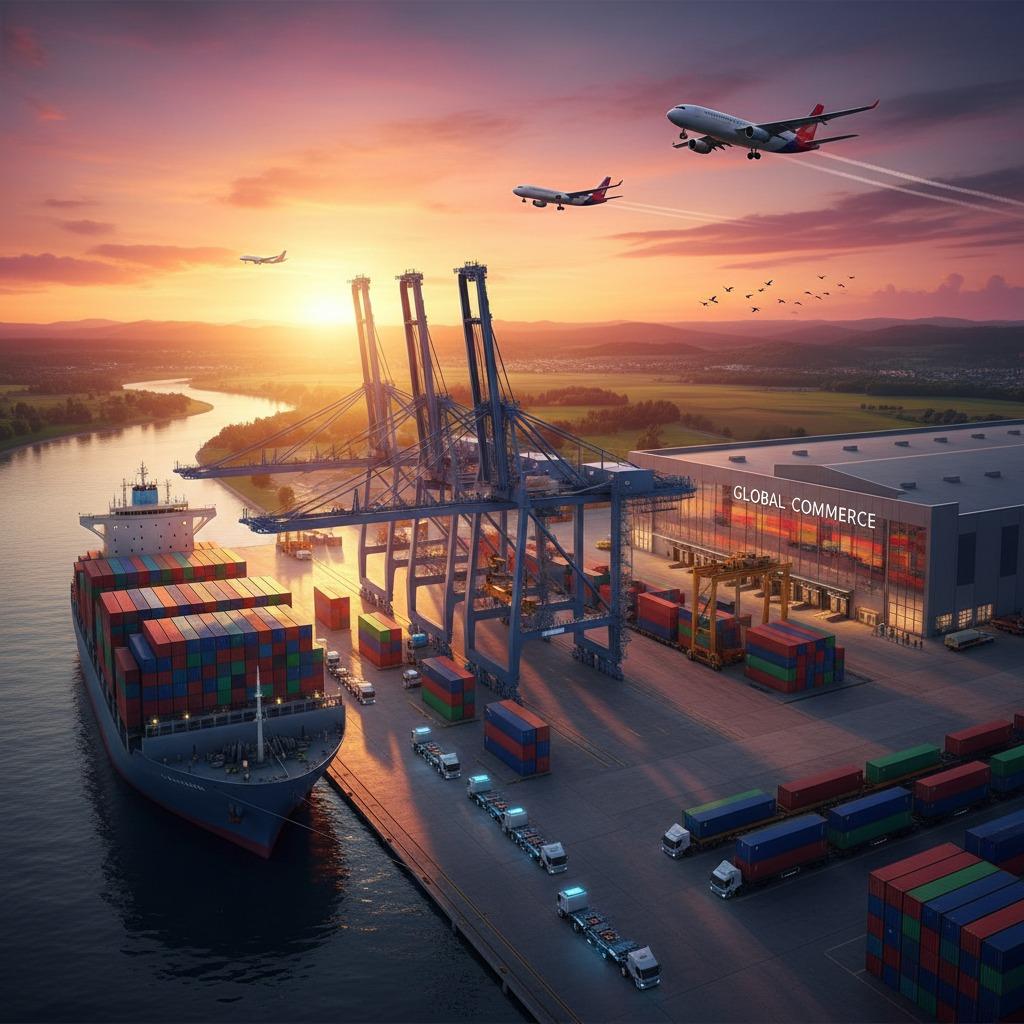
Elevate your logistics with automation, particularly in port operations. Introduce an Autonomous Container Handling System as your next step. Start by installing AI-powered cranes and vehicles that move containers with precision, reducing human error and turnaround times. Connect these to a central network for real-time data exchange, enabling predictive maintenance and resource optimization. Step three: Integrate this with broader multi-modal hubs that combine air, sea, rail, and ground transport. Visualize a facility where cargo planes, container ships, freight trains, and electric trucks operate in harmony under a sunset skyline, ensuring swift distribution. Emphasize sustainability by using electric trucks for last-mile delivery, cutting emissions. Train your team on these technologies to maximize adoption, and regularly audit performance to refine operations. This approach transforms logistics into a dynamic, sustainable powerhouse.
Monitoring, Adapting, and Scaling Your Logistics Operations
Finally, establish ongoing monitoring to sustain logistics excellence. Use analytics from your integrated systems to track key performance indicators like delivery accuracy and cost savings. Conduct quarterly reviews to adapt to market changes, such as new trade regulations or supply disruptions. Scale by expanding to additional routes or incorporating rail for inland efficiency. By following these steps—assessment, integration, automation, and monitoring—you'll not only optimize logistics but also future-proof your supply chain against global challenges. Embrace these strategies to redefine efficiency, reliability, and sustainability in your business's logistics framework.





