
What is Logistics and Why Does It Matter?
Logistics is the backbone of global trade, encompassing the planning, execution, and control of the movement and storage of goods, services, and information from origin to consumption. In today's interconnected world, effective logistics ensures that products reach consumers efficiently and on time. As businesses expand internationally, understanding logistics becomes crucial for optimizing supply chains and reducing costs. Our innovations in hybrid platforms highlight how logistics can integrate air and sea transport to revolutionize transportation systems.
How Does the Hybrid Logistics Platform Work?
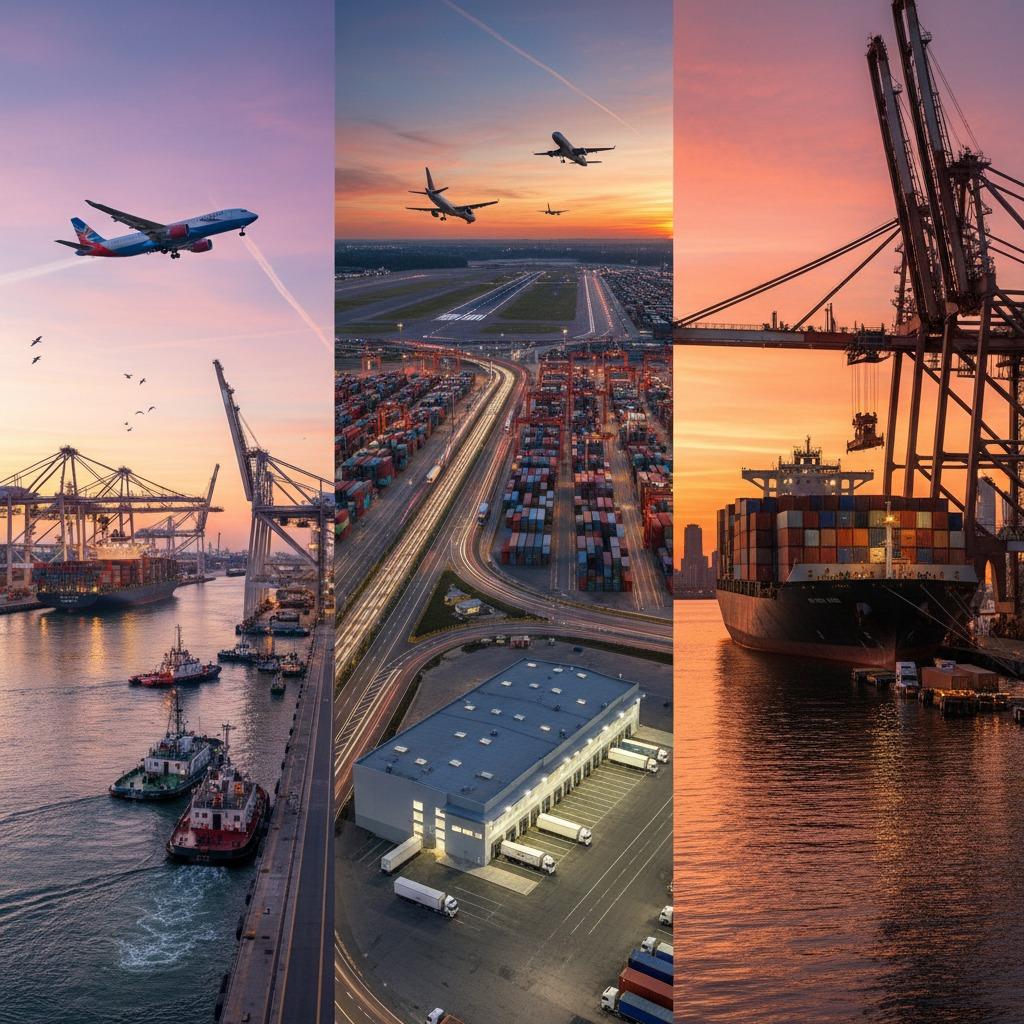
The hybrid logistics platform seamlessly combines advanced cargo aircraft technology with state-of-the-art maritime systems. This integration allows for rapid long-distance deliveries via aircraft equipped with cutting-edge turbines for fuel efficiency and reduced environmental impact. On the maritime side, robust shipping vessels with intelligent navigation ensure safe and timely passage. The platform facilitates swift transfers at expansive harbor facilities using cranes and loaders, enabling containers to move effortlessly between air and sea. This synergy minimizes delays and enhances overall efficiency in logistics operations.
What Role Does Automation Play in Modern Logistics?
Automation is transforming logistics by incorporating precision sensors, AI algorithms, and autonomous vehicles. In our state-of-the-art automated shipping and cargo management system, cranes handle containers with accuracy, coordinating with self-driving trucks to minimize turnaround times. Real-time monitoring adjusts operations dynamically, reducing human error and ensuring reliability around the clock. Moreover, sustainability features like energy-efficient machinery and electric vehicles lower emissions, making logistics greener. These advancements set new benchmarks for speed and precision in global trade.
How Does the Integrated Transport and Warehousing Hub Enhance Logistics?
The integrated transport and warehousing hub optimizes supply chains by uniting air, sea, rail, and road transport. Featuring an airborne fleet for worldwide connectivity and towering cranes at shipping docks for efficient cargo handling, the hub includes advanced warehouses with real-time inventory tracking. Adjacent rail corridors and ready fleets of trucks ensure synchronized dispatches, delivering goods accurately and swiftly. This ecosystem embodies the future of logistics, harnessing technology for reliability and performance in freight handling.
What Are the Benefits of These Logistics Innovations?
Adopting these logistics innovations leads to faster deliveries, cost savings, and environmental benefits. The convergence of air and sea reduces transit times, while automation boosts throughput and safety. Warehousing hubs provide seamless connectivity across transport modes, minimizing bottlenecks. For businesses, this means expanded trading capabilities and competitive edges in a fast-paced market. Exploring these solutions can redefine how companies approach global logistics, making operations smarter and more sustainable.
How Can Businesses Implement Advanced Logistics Systems?
Implementing advanced logistics starts with assessing current supply chain needs and integrating compatible technologies. Partnering with providers offering hybrid platforms ensures smooth transitions. Training staff on AI-driven tools and monitoring systems is essential for adoption. Additionally, focusing on scalable solutions like integrated hubs allows growth without disruptions. By prioritizing efficiency and sustainability, businesses can achieve optimal logistics performance and stay ahead in global trade.





