
Revolutionizing Logistics: The Backbone of Global Commerce
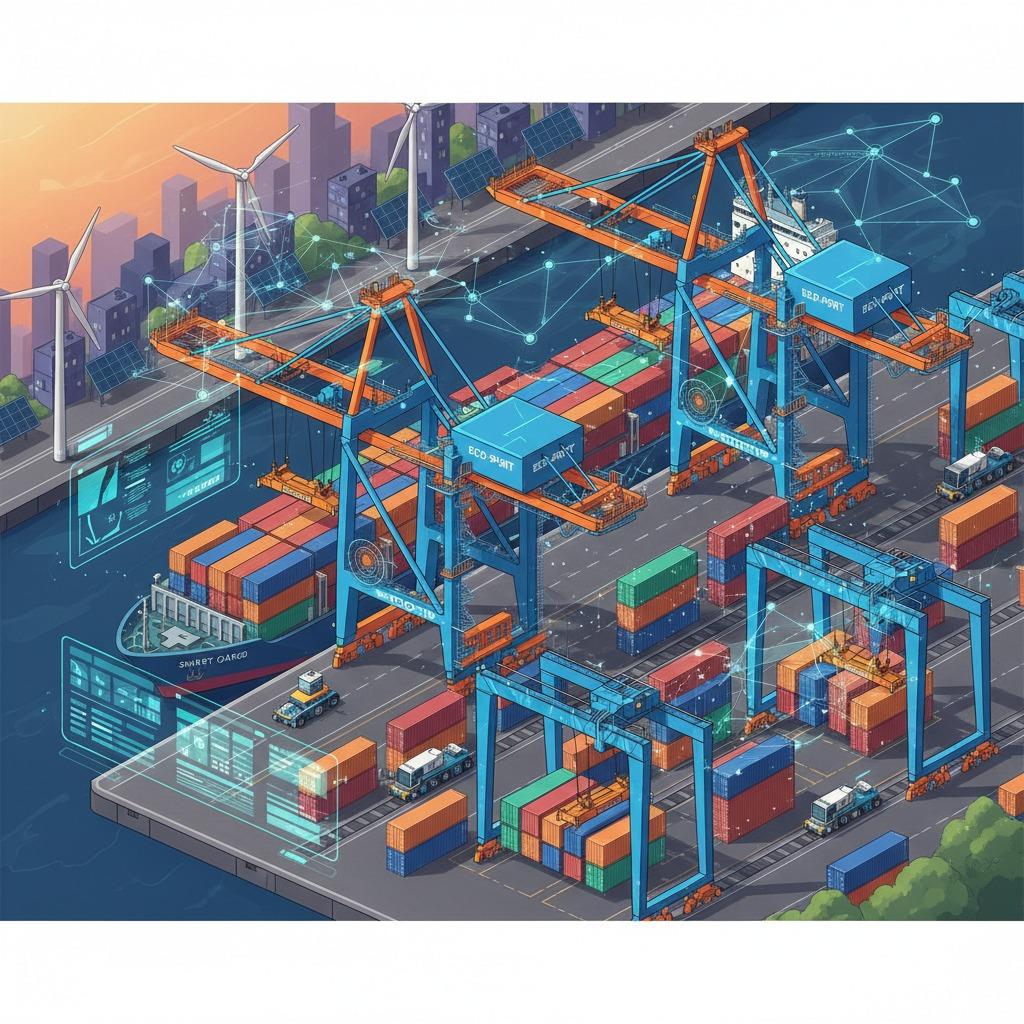
In the fast-paced world of international trade, logistics stands as the cornerstone that ensures the seamless flow of goods across borders. As businesses expand globally, effective logistics management becomes crucial for maintaining efficiency, reducing costs, and meeting customer demands. This article delves into the technical intricacies of modern logistics, exploring how advanced technologies and strategic infrastructures are transforming supply chains. From port operations to automated tracking systems, logistics is evolving to handle the complexities of today's interconnected economy.
The Technical Foundations of Port-Based Logistics
At the heart of logistics lies sophisticated port infrastructure, where high-capacity gantry cranes and automated systems orchestrate the movement of shipping containers. These facilities integrate digital tracking technologies, such as RFID and IoT sensors, to monitor cargo in real-time. For instance, gantry cranes equipped with precision hydraulics can lift loads exceeding 40 tons with minimal sway, optimizing stacking density and reducing handling time by up to 30%. The strategic waterfront designs incorporate variable-depth berths, allowing vessels from supertankers to feeder ships to dock efficiently. Interconnected rail and road networks further enhance logistics by enabling just-in-time deliveries, minimizing inventory holding costs. In this domain, logistics software platforms use algorithms like linear programming to predict vessel arrival times and allocate resources dynamically, ensuring operational continuity even during peak seasons.
Advancements in Maritime Logistics and Vessel Support
Maritime logistics demands robust equipment to manage the challenges of open waters and heavy cargo. Multi-purpose tugboats, for example, feature advanced propulsion systems powered by high-efficiency diesel-electric engines, delivering thrust outputs of over 5,000 horsepower for precise maneuvering. These vessels incorporate dynamic positioning systems (DPS) that use GPS and thruster controls to maintain exact locations without anchors, crucial for operations in congested harbors. Paired with heavy-duty cranes boasting telescopic booms extending up to 100 meters, they facilitate efficient cargo transfer rates of 50 containers per hour. Environmental sustainability is integrated through low-emission fuels and ballast water treatment systems compliant with IMO regulations, reducing ecological impact. In logistics chains, these assets employ predictive maintenance via AI-driven analytics, forecasting component failures to cut downtime by 25% and enhance overall reliability.
Integrating Technology for End-to-End Logistics Optimization
Beyond physical infrastructure, logistics thrives on digital integration. Blockchain technology secures supply chain transparency, logging transactions in immutable ledgers that prevent fraud and expedite customs clearance. Warehouse automation, including autonomous guided vehicles (AGVs) and robotic arms, streamlines picking and packing with accuracies exceeding 99%. For air and sea logistics, predictive analytics models forecast disruptions like weather delays using machine learning on historical data, rerouting shipments proactively. Fuel efficiency in transport vessels is boosted by aerodynamic designs and wingtip optimizations, cutting consumption by 15% on long hauls. Ultimately, a holistic logistics strategy leverages ERP systems to synchronize all nodes—from origin ports to final delivery—ensuring scalability for global enterprises. As logistics continues to innovate, it not only supports commerce but redefines it, making the world smaller and trade faster.





