
Revolutionizing Supply Chain Efficiency with Advanced Logistics Solutions
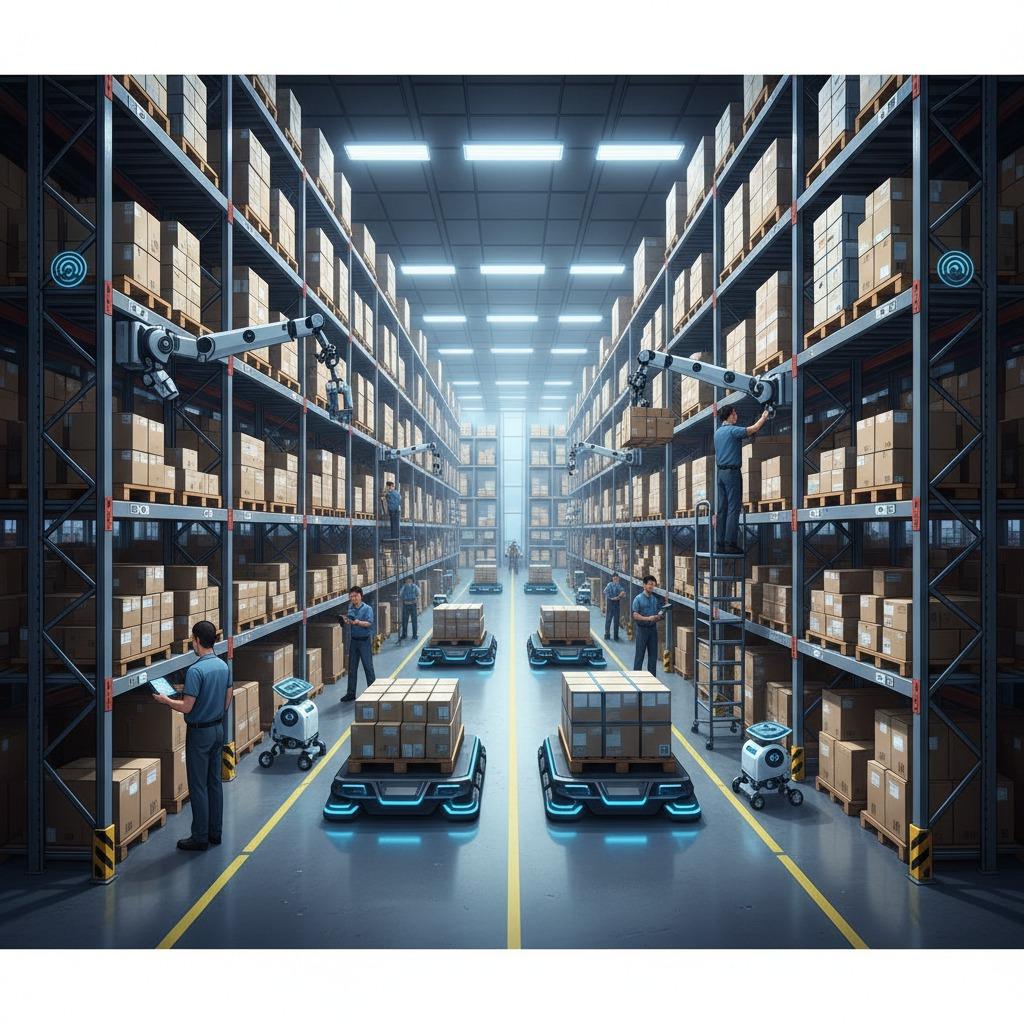
In the fast-paced world of modern commerce, logistics stands as the backbone of seamless operations, ensuring that goods move from origin to destination with precision and speed. Our cutting-edge logistics solutions integrate high-density racking systems, smart packaging technologies, and automated handling equipment to optimize warehouse and transportation workflows. This article delves into the technical intricacies of these systems, highlighting how they enhance productivity and reduce operational costs for businesses across industries.
High-Density Racking Systems in Warehouse Logistics
At the core of efficient logistics is the high-density racking system, designed to maximize vertical space utilization in warehouses. These industrial-grade shelving units, constructed from durable orange-and-blue steel alloys, support loads up to several tons per level while adhering to international safety standards like ISO 9001. The modular design allows for scalable configurations, enabling warehouses to adapt to fluctuating inventory demands without extensive renovations. Integration with warehouse management software (WMS) provides real-time inventory tracking via RFID sensors embedded in each rack level. This setup minimizes retrieval times by up to 40%, as automated guided vehicles (AGVs) navigate predefined paths to access items. From a technical standpoint, the racking's anti-corrosion coatings ensure longevity in humid environments, reducing maintenance downtime and extending asset life cycles.
Smart Packaging and Advanced Forklift Integration
Logistics efficiency extends to smart packaging and labeling, where each container is equipped with barcode or RFID tags for instantaneous data capture. These systems employ IoT-enabled scanners that communicate with central databases, facilitating just-in-time inventory updates and predictive analytics for demand forecasting. In parallel, advanced forklift technology enhances material handling precision. Our ergonomic forklifts, featuring hydraulic lifts with load capacities exceeding 5,000 kg, incorporate lithium-ion batteries for uninterrupted operation, achieving up to 8 hours of runtime per charge. Real-time communication modules sync with fleet management software, allowing operators to receive navigation cues via onboard displays, which reduces collision risks by 30% through proximity sensors and AI-driven path optimization. The durable, polished flooring in these setups, often epoxy-coated for slip resistance, ensures smooth forklift mobility, further streamlining the logistics process.
State-of-the-Art Lighting and Integrated Systems for Operational Excellence
Visibility is paramount in logistics environments, and our state-of-the-art LED lighting systems deliver uniform illumination exceeding 500 lux across warehouse floors. These energy-efficient fixtures, controlled by motion sensors and integrated with building management systems (BMS), adjust brightness dynamically to conserve up to 60% of power compared to traditional halogen setups. Behind the scenes, integrated systems like cloud-based WMS synchronize racking, packaging, and forklift operations. Using APIs for data interoperability, these platforms enable predictive maintenance alerts—such as vibration monitoring on racks to preempt structural failures—and automation scripts that orchestrate picking sequences. For instance, machine learning algorithms analyze historical data to optimize stock placement, reducing travel distances for workers by 25%.
Heavy-Duty Equipment for Global Logistics Networks
Beyond the warehouse, logistics demands robust solutions for intermodal transport, exemplified by container stacker cranes handling Maersk shipping containers. These cranes, powered by electric motors with variable frequency drives (VFDs), achieve lifting speeds of 60 meters per minute while maintaining stability through gyroscopic sensors. The containers themselves, forged from Corten steel with a tensile strength of 550 MPa, resist corrosion and comply with ISO 668 standards for stacking up to nine high. Intermodal connectivity is enhanced by standardized corner fittings, allowing seamless transfers between ships, trains, and trucks, which cuts handling costs by 15-20%. Safety features include overload protection relays and emergency stop circuits, ensuring compliance with OSHA guidelines.
High-Performance Freight Trains for Rugged Terrain Logistics
For overland logistics in challenging environments, high-performance freight trains represent engineering excellence. These locomotives feature hybrid propulsion systems combining diesel-electric engines with battery packs, delivering torque outputs of 10,000 Nm for gradients up to 3%. Aerodynamic profiling reduces drag coefficients by 25%, improving fuel efficiency to 500 ton-miles per gallon. The cooling systems, with finned radiators and variable-speed fans, maintain optimal temperatures under loads exceeding 100 tons. Onboard sensors feed data to predictive analytics platforms, forecasting maintenance needs like brake pad wear based on usage patterns. Driver cabins integrate HUD displays and autonomous braking systems, enhancing safety on mountainous routes while supporting versatile cargo configurations from modular containers to bulk flatbeds.
Incorporating these logistics technologies transforms supply chains into agile, resilient networks. By leveraging durable infrastructure, automation, and data-driven insights, businesses can achieve unprecedented efficiency, scalability, and sustainability in their operations.





