
Understanding the Backbone of Global Trade: Logistics
Logistics forms the essential framework that keeps the wheels of international commerce turning smoothly. In today's interconnected world, logistics encompasses the planning, execution, and control of the efficient movement and storage of goods, services, and information from origin to consumption. Whether it's coordinating shipments across oceans or managing inventory in vast warehouses, effective logistics ensures that products reach their destinations on time and in optimal condition. This intricate process relies on a blend of technology, infrastructure, and human expertise to minimize costs and maximize efficiency.
Key Components of Modern Logistics Infrastructure
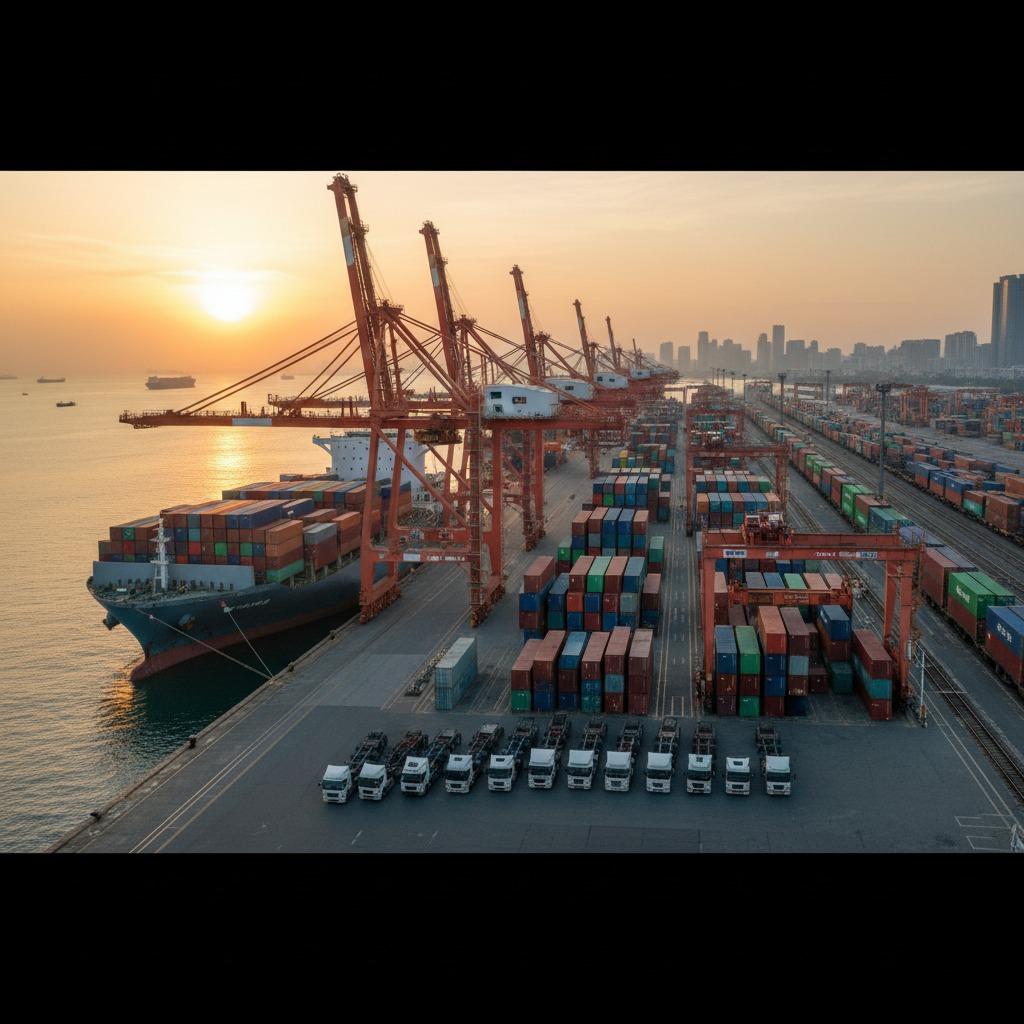
At the heart of logistics are sprawling container ports that serve as vital hubs for global trade. These facilities, equipped with extensive loading capacities and advanced machinery, handle immense volumes of cargo daily. Specialized cranes, often in vibrant yellow and green, facilitate the seamless transfer of goods between massive vessels, trucks, and rail systems. The strategic waterfront locations of these ports optimize access to international trade routes, reducing transit times and enhancing overall supply chain reliability. Moreover, the meticulous stacking and organization of colorful shipping containers exemplify the precision required in logistics operations, enabling rapid retrieval and tracking through digital systems. Sustainability is increasingly integral, with eco-friendly designs incorporating energy-efficient equipment to lower emissions while maintaining high productivity.
Innovations in Aviation and Maritime Logistics
Logistics extends beyond land and sea into the skies, where modern aircraft play a crucial role in expedited freight transport. These marvels of engineering feature sleek designs with powerful jet engines that deliver exceptional reliability for long-haul flights. The elongated fuselages maximize cargo space without compromising on aerodynamics, which reduces fuel consumption and supports environmentally conscious operations. In maritime logistics, state-of-the-art harbor tugs enhance port efficiency by maneuvering large vessels with precision. Equipped with advanced communication systems and reinforced hulls, these compact powerhouses ensure safe and swift dock operations, even at dusk. Such innovations highlight how logistics evolves to meet the demands of faster, greener, and more reliable global transport networks.
The Impact of Logistics on Business and the Environment
Effective logistics not only drives economic growth but also influences environmental sustainability. By optimizing routes and adopting automation, companies reduce waste and carbon footprints in their operations. For instance, intermodal transport—shifting goods between ships, planes, and trucks—streamlines processes and cuts down on redundant handling. Statistics show that well-managed logistics can lower global supply chain costs by up to 15%, benefiting businesses of all sizes. As trade volumes continue to surge, investing in robust logistics infrastructure becomes imperative for resilience against disruptions like weather events or geopolitical shifts. Ultimately, logistics is the unsung hero behind everyday conveniences, from the fresh produce on supermarket shelves to the timely delivery of online orders, underscoring its profound role in shaping modern economies.





