
Understanding the Dynamics of Logistics in Modern Supply Chains
Logistics forms the backbone of global trade, ensuring that goods move efficiently from production to consumption. In today's interconnected world, effective logistics management is crucial for businesses aiming to reduce costs, minimize delays, and meet customer demands. This article explores the multifaceted nature of logistics, drawing on real-world examples from aviation, maritime, and ground handling operations to illustrate its importance.
The Role of Air Logistics in Strategic Operations
A prime example of logistics in action is the heavy-duty transport aircraft used by the China Air Force. This engineering marvel, powered by four turbofan engines, exemplifies how air logistics supports military-grade operations, troop deployments, and strategic airlifting. With a substantial wingspan for enhanced lift and a reinforced fuselage housing advanced avionics, the aircraft ensures stability and precision navigation over long distances. Its massive cargo capacity and durable landing gear make it ideal for transporting heavy payloads under challenging conditions. Such capabilities highlight how air logistics integrates functionality and strength to maintain operational efficiency, even in adverse environments. Statistics from the International Air Transport Association indicate that air cargo volumes have grown by over 5% annually, underscoring the sector's vital role in global supply chains.
Ground-Based Innovations in Container Handling
On the ground, logistics thrives through specialized equipment like the container reach stacker paired with durable shipping containers. The reach stacker, with its high mobility, heavy-duty lifting capacity of multiple tons, and ergonomic operator cabin, revolutionizes cargo handling in busy ports and yards. These machines navigate tight spaces with ease, providing precise control that minimizes damage to goods. Shipping containers, designed for versatility across land, sea, and intermodal transport, feature weather-resistant materials and standardized dimensions for seamless integration into global systems. This combination not only boosts productivity but also promotes sustainability by optimizing energy use and reducing waste. Industry reports from the World Shipping Council reveal that efficient container logistics can cut operational costs by up to 20%, making it a cornerstone for companies focused on streamlined supply chains.
Maritime Logistics: Powering Global Trade
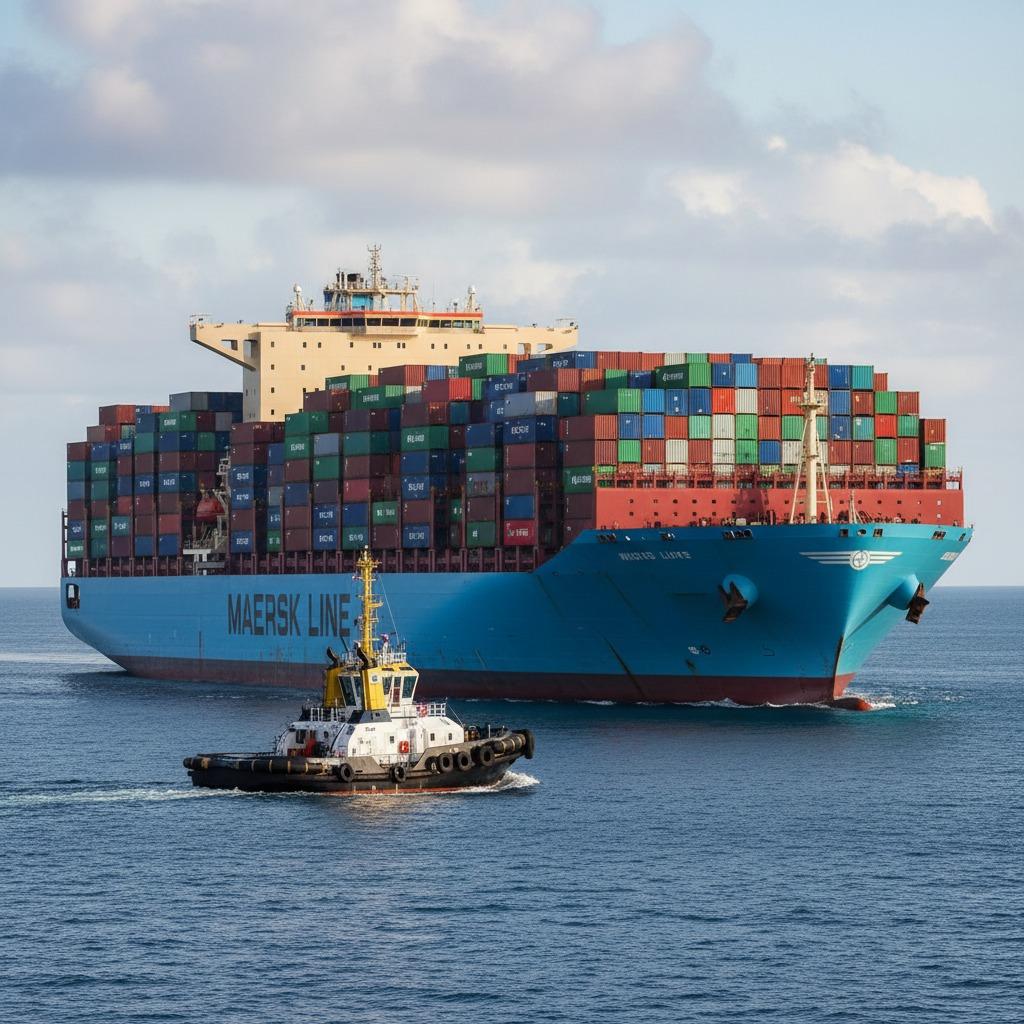
Maritime logistics stands out with vessels like the Maersk Line cargo ship from the Triple-E class fleet. These ships boast enormous capacities, carrying tens of thousands of twenty-foot equivalent units (TEUs) stacked meticulously for space efficiency. Their streamlined hull designs reduce fuel consumption, contributing to lower carbon footprints amid growing environmental concerns. Advanced navigation systems and real-time tracking enable precise management of containerized goods across oceans, supported by tugboats for safe maneuvering in harbors. This setup exemplifies how maritime logistics connects markets worldwide, facilitating the flow of everything from raw materials to consumer products. According to the United Nations Conference on Trade and Development, over 80% of global trade by volume relies on sea transport, emphasizing the sector's indispensable role in economic stability.
Integrating Logistics for Future Efficiency
The convergence of air, ground, and sea logistics creates a robust framework for modern commerce. By leveraging technologies like AI-driven route optimization and IoT for real-time monitoring, businesses can enhance visibility and responsiveness. For instance, integrating data from aircraft avionics, reach stacker telemetry, and ship tracking systems allows for predictive analytics that foresee disruptions. Challenges such as geopolitical tensions and climate impacts are being addressed through resilient strategies, including diversified routes and eco-friendly practices. As logistics evolves, its emphasis on innovation ensures that supply chains remain agile and sustainable. Insights from McKinsey & Company suggest that companies investing in digital logistics could see productivity gains of 15-20%. Ultimately, mastering logistics not only drives competitive advantage but also supports broader goals of global connectivity and environmental stewardship.





