
Understanding the Fundamentals of Logistics
Logistics forms the backbone of modern supply chains, ensuring that goods move efficiently from origin to destination. This critical process involves planning, implementing, and controlling the flow of materials and information to meet customer requirements. In today's global economy, effective logistics is essential for businesses aiming to reduce costs, improve delivery times, and enhance customer satisfaction. Companies rely on logistics to manage everything from inventory storage to transportation modes, making it a cornerstone of operational success.
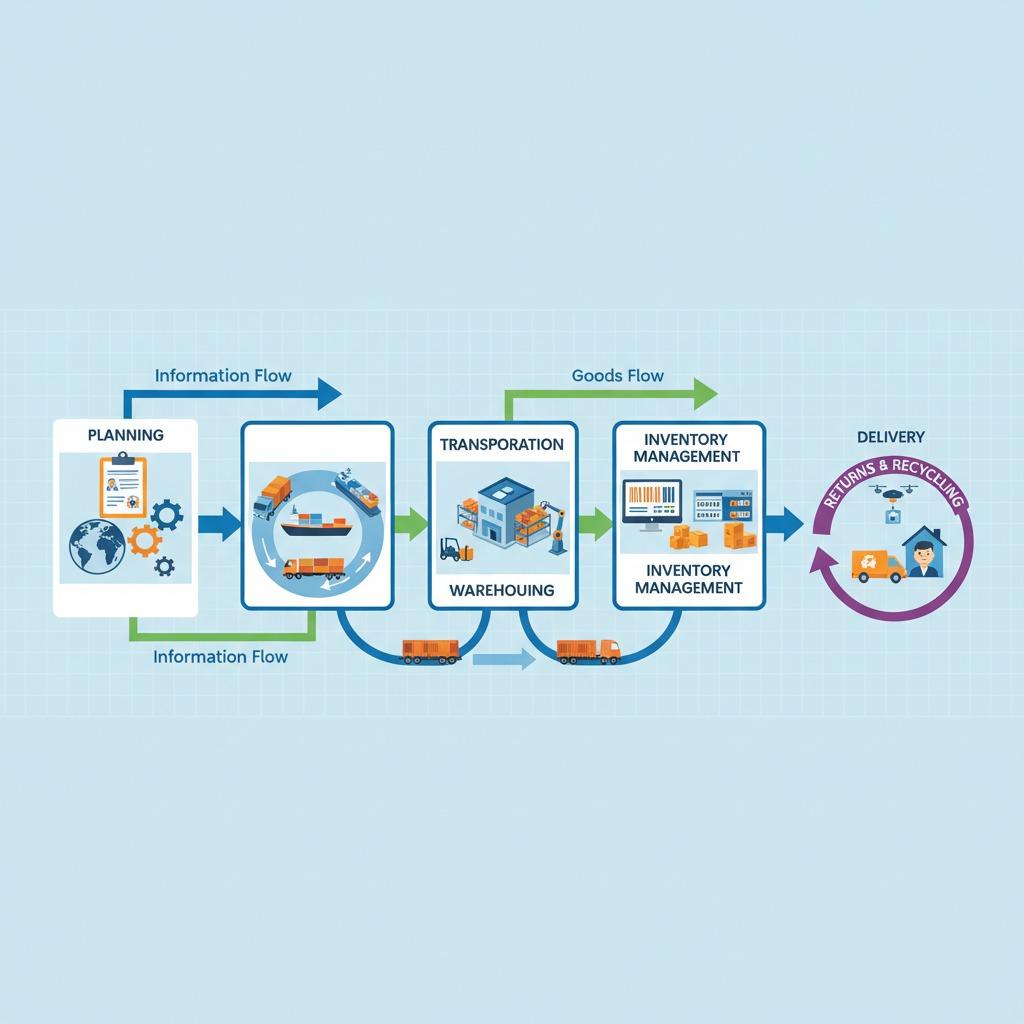
Key Components of Logistics Management
At its core, logistics encompasses several interconnected elements that work together to streamline operations. Transportation is a primary component, involving the selection of optimal routes and carriers for air, sea, road, or rail freight. Warehousing plays a vital role by providing secure storage solutions and enabling efficient inventory management through technologies like RFID tracking. Supply chain coordination ensures seamless integration between suppliers, manufacturers, and distributors, minimizing disruptions. Additionally, reverse logistics handles returns and recycling, promoting sustainability in the process. Statistics from the Council of Supply Chain Management Professionals indicate that efficient logistics can reduce overall costs by up to 15%, highlighting its economic impact.
Technological Advancements in Logistics
Innovation is transforming the logistics landscape, with digital tools driving unprecedented efficiency. Artificial intelligence and machine learning are revolutionizing predictive analytics, allowing companies to forecast demand and optimize routes in real-time. Blockchain technology enhances transparency by securing transaction records across the supply chain, reducing fraud and errors. Internet of Things (IoT) devices provide real-time tracking of shipments, enabling proactive issue resolution. For instance, automated systems in ports, such as smart container tracking and crane coordination, have been shown to cut turnaround times by 30%, according to industry reports from McKinsey. These advancements not only boost productivity but also align with global sustainability goals by lowering carbon emissions through optimized fuel use.
Challenges and Solutions in Global Logistics
Despite its importance, logistics faces significant hurdles in a complex world. Geopolitical tensions, natural disasters, and pandemics can disrupt supply chains, leading to delays and increased costs. Labor shortages and regulatory compliance add further complexity, particularly in international trade. To address these, businesses are adopting resilient strategies like diversified sourcing and multi-modal transportation. Collaborative platforms enable better communication among stakeholders, fostering agility. Data from the World Trade Organization reveals that resilient logistics practices helped mitigate losses during recent global disruptions, underscoring the need for adaptive frameworks. By investing in robust logistics systems, companies can navigate uncertainties and maintain competitive edges.
The Future of Logistics and Its Broader Impact
Looking ahead, logistics is poised for further evolution with emerging trends like autonomous vehicles and drone deliveries reshaping distribution networks. Sustainability remains a priority, with eco-friendly practices such as electric fleets and green warehousing gaining traction. The integration of 5G technology will enhance connectivity, enabling even faster data exchange for decision-making. Economically, the logistics sector contributes over 10% to global GDP, as per International Labour Organization figures, influencing trade volumes and employment worldwide. As businesses prioritize efficient logistics, they not only improve operational performance but also contribute to a more interconnected and sustainable global economy. Embracing these developments ensures that logistics continues to drive progress in commerce and beyond.





