
Understanding Logistics in Global Trade
In the world of international commerce, logistics plays a pivotal role in ensuring that goods move efficiently from one point to another. This intricate process encompasses everything from planning and implementation to control of the flow of goods, services, and related information. Effective logistics not only reduces costs but also enhances customer satisfaction by delivering products on time and in optimal condition. As global trade expands, the demand for robust logistics solutions has never been higher, with innovations driving the sector forward.
The Importance of Reliable Logistics Services
A comprehensive logistics service is essential for businesses navigating complex supply chains. These services integrate various modes of transportation, warehousing, and inventory management to create a seamless operation. For instance, in maritime logistics, specialized vessels are designed to handle vast quantities of cargo while adhering to strict safety and efficiency standards. Logistics service providers often employ advanced technologies, such as GPS tracking and automated systems, to monitor shipments in real-time, minimizing delays and potential losses. By outsourcing to a trusted logistics service, companies can focus on their core operations while experts handle the intricacies of global movement.
Advancements in Transportation Logistics
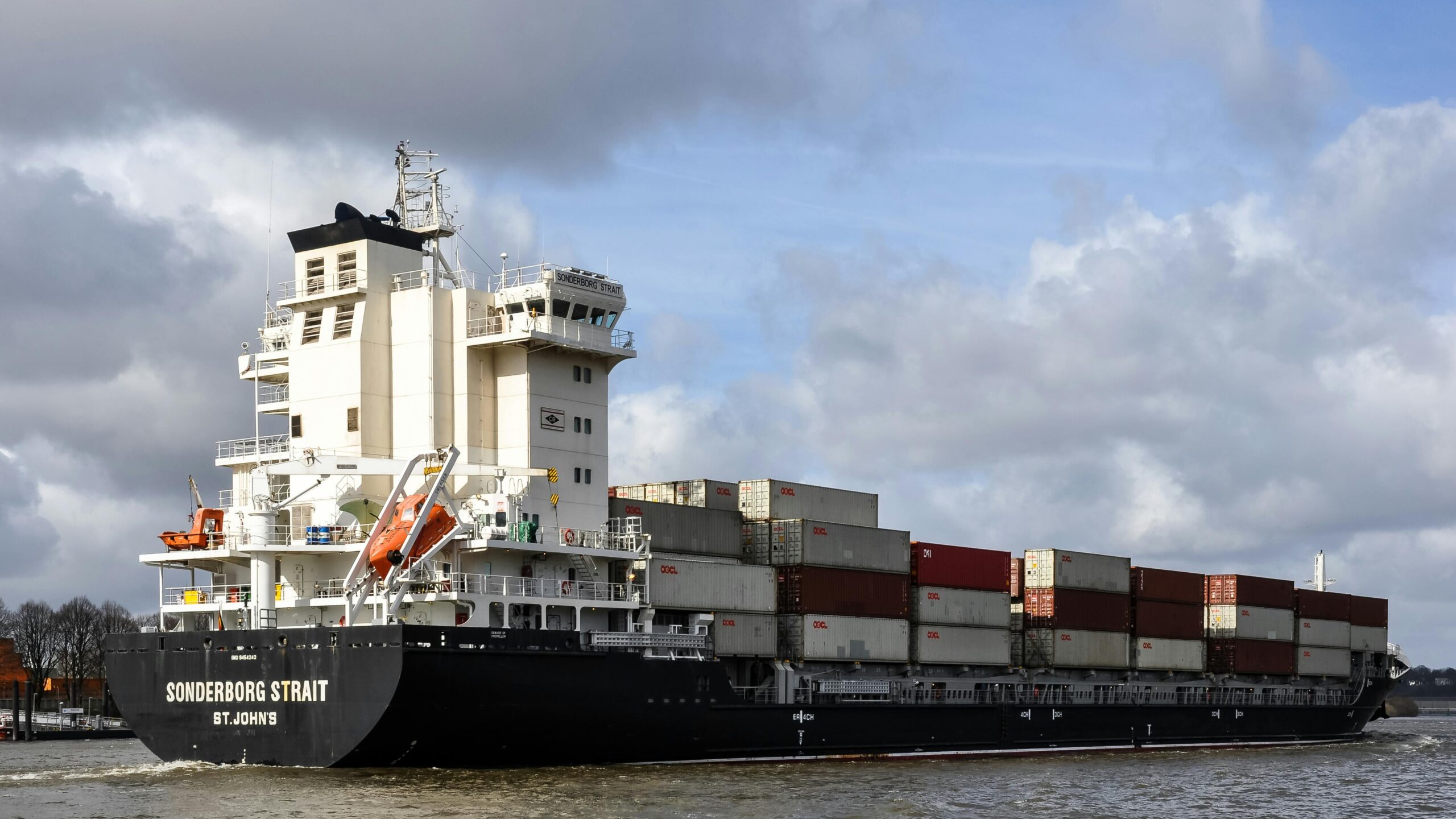
Transportation logistics represents the backbone of the supply chain, particularly in sectors reliant on ocean freight. Modern container ships exemplify this evolution, offering unprecedented capacity and reliability for overseas transport. Take the Sonderborg Strait, a state-of-the-art vessel registered in St. Johns, as a prime example. With its sleek black hull and robust structure, it is engineered to transport significant volumes of containers across vast oceans, ensuring secure and efficient delivery. The ship's towering superstructure is equipped with cutting-edge navigational technology and communication systems, which enhance safety and operational precision. This focus on transportation logistics allows for swift loading and unloading at ports, reducing turnaround times and supporting the continuous flow of international trade.
Optimizing Efficiency with Specialized Vessels
The design of vessels like the Sonderborg Strait highlights how logistics innovation meets practical needs. Its meticulously organized deck optimizes space for container shipping, incorporating efficient mechanisms that streamline the handling process. Beyond functionality, the ship prioritizes crew comfort with well-crafted accommodations, including essential amenities for long voyages. This balance ensures that operations run smoothly, even under demanding conditions. In the broader context of logistics, such vessels contribute to sustainable practices by maximizing load capacity, thereby reducing the number of trips required and lowering the environmental impact of global shipping.
Future Trends in Logistics and Shipping
Looking ahead, the integration of digital tools and automation will further transform logistics and transportation logistics. Predictive analytics can forecast potential disruptions, allowing for proactive adjustments in routes and schedules. As companies increasingly rely on maritime routes for their logistics needs, vessels like the Sonderborg Strait set the standard for reliability and efficiency. By embracing these advancements, businesses can achieve greater agility in their supply chains, adapting to market fluctuations and regulatory changes. Ultimately, a strong emphasis on innovative logistics services ensures that global trade remains vibrant and interconnected, fostering economic growth worldwide.
The Sonderborg Strait not only embodies these principles but also invites stakeholders to experience the future of shipping, where cutting-edge design propels commerce forward on the open seas.





