
Understanding the Role of Logistics in Modern Supply Chains
Logistics forms the backbone of global trade, ensuring that goods move efficiently from origin to destination. In today's interconnected world, effective logistics management is crucial for businesses aiming to stay competitive. This involves coordinating transportation, warehousing, and distribution to minimize costs and maximize speed. For instance, advanced logistics solutions like smart container ports handle high-volume container movements with precision, reducing turnaround times for vessels and optimizing berth productivity.
Key Components of Efficient Logistics Operations
At the heart of logistics are elements such as quay operations and vessel coordination. Modern ports equipped with heavy-duty gantry cranes exemplify this, allowing simultaneous berthing of multiple large ships. These cranes, designed for long outreach and fast cycle times, facilitate seamless loading and unloading, which is essential for handling dense container stacks. Additionally, integrated logistics capabilities synchronize maritime, landside, and yard activities, ensuring containers transition smoothly from ship to staging areas and onward transport. This disciplined organization enhances scheduling accuracy and builds resilience against peak traffic demands.
Innovations Driving Logistics Forward
Logistics is evolving with technologies that emphasize scalability and efficiency. Modular designs in port infrastructure, featuring repeated crane structures and extended quay lines, allow terminals to expand with rising container volumes or larger vessels. Beyond maritime applications, logistics extends to specialized tools like high-performance concrete bucket crane attachments for construction sites. These attachments, built with reinforced steel and efficient discharge mechanisms, integrate seamlessly with standard cranes to streamline elevated workflows while prioritizing safety through secure locking systems. Such innovations reduce waste, ensure precise concrete pouring, and support projects like high-rise buildings and bridges.
Air Freight: A Vital Arm of Global Logistics
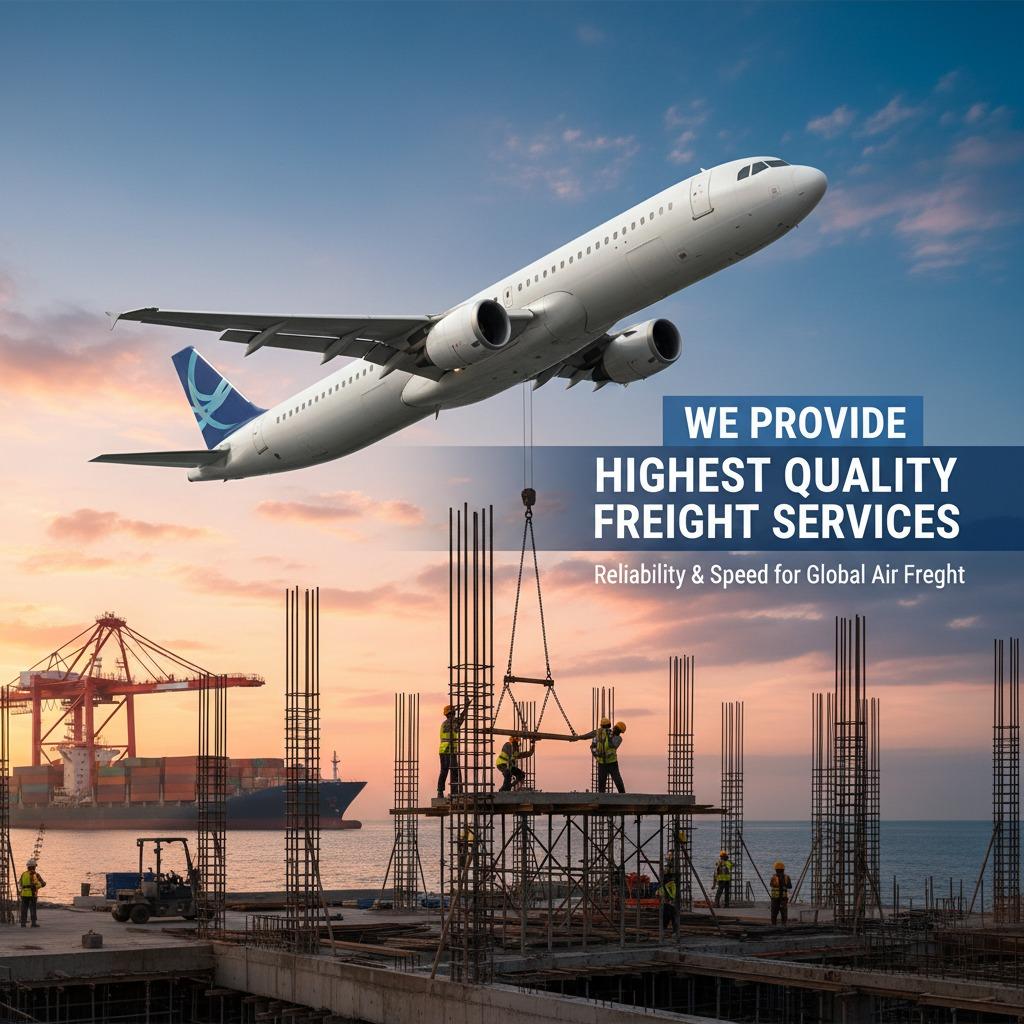
Air freight services represent a high-speed segment of logistics, ideal for time-sensitive shipments in industries such as e-commerce, electronics, and healthcare. These services offer global coverage with secure handling and customized solutions, ensuring cargo arrives reliably and on time. The efficiency of air logistics complements sea-based operations by providing rapid delivery options, forming a comprehensive network that supports international shipping. For businesses, this means better fleet coordination and minimized idle times across various transport modes.
The Future of Logistics and Scalable Solutions
Looking ahead, logistics will continue to prioritize performance platforms that combine heavy engineering with intelligent flow. Scalable terminals not only manage current trade intensities but also adapt to future growth in diversified shipping routes. The aesthetic and functional design of these systems—bold red cranes against clean waterfronts—symbolizes power and precision, making them iconic gateways for global commerce. By integrating such solutions, companies can achieve higher throughput, multi-berth operations, and streamlined dockside processes, ultimately driving economic connectivity on a worldwide scale. In essence, robust logistics ensures that supply chains remain agile, resilient, and ready for tomorrow's challenges.





