
What is Logistics and Why Does It Matter?
Logistics forms the backbone of modern global trade, encompassing the planning, execution, and control of the movement and storage of goods, services, and information from origin to consumption. In essence, logistics ensures that products reach their destinations efficiently and cost-effectively, playing a pivotal role in supply chain management. Whether it's transporting military cargo via aircraft or handling shipping containers at ports, effective logistics minimizes delays, reduces costs, and enhances customer satisfaction. For businesses, understanding logistics is crucial as it directly impacts operational success and competitiveness in an interconnected world.
How Do Aircraft Contribute to Logistics in Military and Commercial Contexts?
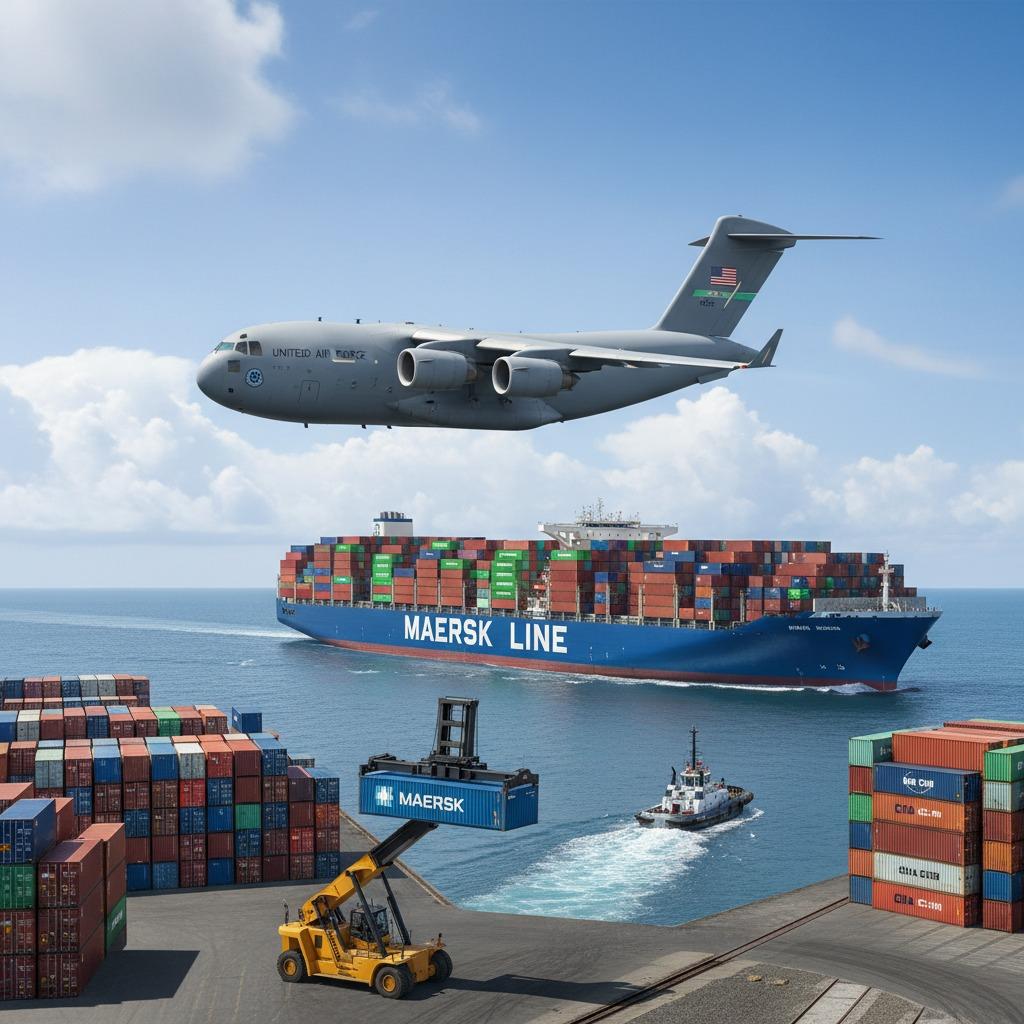
Aircraft are vital for rapid logistics, particularly in scenarios requiring swift deployment over long distances. In military logistics, heavy-lift transport planes like those with a high-mounted wing and four-engine configurations excel at delivering oversized equipment, vehicles, and supplies to remote areas. These aircraft, often marked for strategic operations, feature designs optimized for voluminous cargo holds and sustained cruise capabilities, enabling quick response in humanitarian relief or troop movements. Commercially, similar principles apply, where air freight logistics supports time-sensitive shipments such as electronics or perishables, bridging gaps that sea or ground transport cannot. The streamlined fuselage and T-tail designs enhance stability and efficiency, making these platforms indispensable for global logistics networks that demand speed and reliability.
What Role Do Container Handlers Play in Efficient Logistics?
Container handlers are essential machinery in logistics operations at ports and freight yards, designed to streamline the loading, unloading, and stacking of shipping containers. A typical container reach stacker, with its telescopic arm and adaptable spreader, grips containers securely, allowing vertical stacking in compact spaces while navigating uneven terrains on reinforced tires. Brands like Maersk dominate this space, providing durable steel containers that withstand harsh conditions during transit. In logistics, these handlers reduce turnaround times and labor efforts, facilitating seamless operations for intercontinental shipping. By integrating advanced lifting mechanisms, they ensure cargo safety and versatility, supporting industries reliant on smooth global trade. This equipment exemplifies how logistics evolves with innovation to handle heavy payloads efficiently, minimizing bottlenecks in supply chains.
How Do Cargo Ships Revolutionize Maritime Logistics?
Cargo ships represent the heavyweights of maritime logistics, capable of transporting tens of thousands of twenty-foot equivalent units (TEUs) across oceans. Vessels from leaders like Maersk Line feature massive deck capacities, eco-friendly propulsion systems, and advanced navigation tools such as GPS and radar, ensuring safe and timely deliveries while cutting emissions. Their sleek hulls and flat deck designs maximize stability and space, ideal for commodities like raw materials, textiles, and electronics. In global logistics, these ships interconnect supply chains, partnering with tugboats for precise maneuvering in ports. This setup not only boosts economic growth but also underscores sustainability efforts in logistics, making long-haul transport cost-efficient and environmentally responsible. As trade volumes rise, such vessels highlight the future of logistics, where scale meets precision to dominate international routes.
What Are Common Challenges in Logistics and How to Overcome Them?
Logistics faces hurdles like supply chain disruptions, regulatory compliance, and fluctuating fuel costs, which can delay operations and inflate expenses. For instance, geopolitical tensions might affect air or sea routes, while weather impacts ground handling. To overcome these, companies adopt technologies like AI-driven tracking and blockchain for transparency, ensuring real-time visibility in logistics flows. Diversifying transport modes—combining air, sea, and rail—builds resilience. In military contexts, robust aircraft designs mitigate risks during high-stakes logistics missions, while port efficiencies from container handlers keep commercial logistics humming. Training personnel and investing in sustainable practices further address challenges, fostering agile logistics systems that adapt to global demands.
Why Integrate Multiple Modes for Comprehensive Logistics?
Effective logistics often requires multimodal integration, blending air, sea, and land transport for optimal results. An aircraft might initiate rapid deployment, followed by sea freight for bulk cargo via massive ships, and finalized with container handlers at destination ports. This synergy enhances flexibility, allowing logistics managers to respond to varying needs— from urgent military logistics to everyday commercial shipments. Maersk's ecosystem, for example, demonstrates this through branded containers compatible across modes, ensuring seamless handoffs. By prioritizing efficiency and innovation, integrated logistics not only cuts costs but also supports broader goals like sustainability and global connectivity, making it a cornerstone for modern enterprises.





