
What is Logistics and Why Does It Matter?
Logistics forms the backbone of global trade and supply chain management, encompassing the planning, execution, and control of the movement and storage of goods, services, and information. In today's interconnected world, effective logistics ensures that products reach consumers efficiently, minimizing delays and costs. Whether it's transporting heavy cargo via aircraft or managing container ships across oceans, logistics integrates various modes of transportation to keep commerce flowing smoothly.
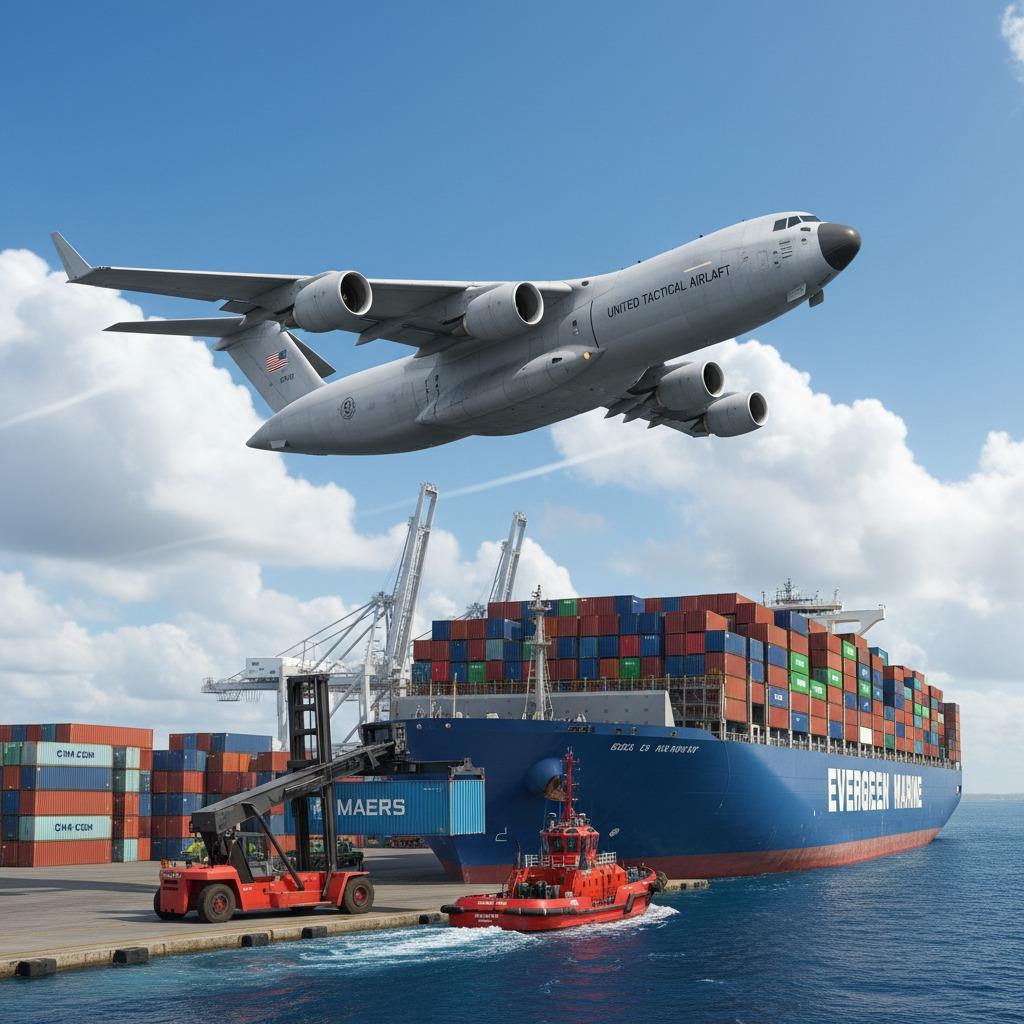
How Do Heavy Transport Aircraft Contribute to Logistics?
Heavy transport aircraft play a crucial role in logistics, especially for time-sensitive or remote deliveries. These magnificent machines, like those used by China's Air Force, are designed for unparalleled performance and versatility. Equipped with four powerful turbofan engines, they handle extremely large payloads over vast distances, making them ideal for cargo, troops, and humanitarian aid. Their wide fuselage and reinforced structure, combined with advanced avionics for navigation and communication, ensure reliability even in challenging conditions. In logistics, such aircraft optimize fuel efficiency and stability, enabling swift responses to global demands.
For instance, in military or emergency scenarios, these aircraft facilitate rapid deployment, showcasing top-tier engineering that supports modernization and operational excellence. Businesses relying on air freight benefit from this technology, as it reduces transit times for high-value or perishable goods, directly impacting supply chain efficiency.
What Role Do Reach Stackers Play in Port Logistics?
In port and yard operations, heavy-duty reach stackers are essential tools in logistics, designed for the seamless handling of shipping containers. These robust machines, often seen lifting Maersk containers, feature extendable lift arms that allow safe stacking at considerable heights and distances, optimizing space in freight yards and terminals. Their multi-tier storage capacity makes them suitable for everything from small operations to mega-container hubs, enhancing overall logistics flow.
Key to their effectiveness is compatibility with standardized containers, ensuring secure transport in international shipping networks. With ergonomic designs for operator comfort and heavy-load capacities, reach stackers prioritize safety and precision, vital for industries like importing, exporting, manufacturing, and warehousing. By streamlining container movement, they reduce bottlenecks, supporting the broader logistics ecosystem that drives global commerce.
How Do Ultra-Large Container Vessels Enhance Global Logistics?
Ultra-large container vessels, such as those from Maersk Line, represent the pinnacle of sea-based logistics, built for maximum scale in global trade. These ships boast immense capacity, with decks stacked in dense layers of containers, enabling fewer voyages for more cargo and higher route efficiency. Their clean, ocean-blue hulls, bold branding, and sculpted bows convey industrial power, while the elevated bridge provides commanding visibility for navigation on major corridors.
The twin funnel design and robust superstructure meet propulsion demands, balancing hydrodynamic performance with cargo optimization. Operationally, they excel in long-haul routes connecting Asia, Europe, the Middle East, and the Americas, facilitating faster loading, tighter schedules, and multimodal transfers between sea, rail, and road. Even with escort tugs for precise maneuvering in ports, these vessels embody reliability and network integration, turning logistics into a high-capacity mobility system.
What Are Common Challenges in Modern Logistics?
Logistics faces challenges like supply chain disruptions, regulatory compliance, and sustainability pressures. For example, geopolitical tensions can delay heavy transport aircraft flights, while port congestion tests reach stacker efficiency. Ultra-large vessels must navigate environmental regulations, pushing for greener fuels. Overcoming these requires integrated technologies, such as AI-driven tracking and eco-friendly designs, to maintain seamless operations.
How Can Businesses Improve Their Logistics Strategies?
To enhance logistics, companies should adopt multimodal approaches, leveraging aircraft for speed, reach stackers for efficiency, and container vessels for volume. Investing in automation and data analytics can predict disruptions, while partnerships with leaders like Maersk ensure reliable networks. Ultimately, robust logistics strategies drive cost savings, customer satisfaction, and competitive edges in a dynamic global market.
FAQs on Logistics Best Practices
Q: What software tools aid logistics management? A: Tools like ERP systems and TMS platforms streamline planning, tracking, and optimization across air, sea, and land transport.
Q: How does sustainability factor into logistics? A: It involves fuel-efficient aircraft, electric reach stackers, and low-emission vessels to reduce carbon footprints without compromising efficiency.
Q: Why integrate air and sea logistics? A: Combining them allows hybrid models, using aircraft for urgent deliveries and vessels for bulk, creating resilient supply chains.





