
Understanding the Role of Logistics in Modern Supply Chains
Logistics forms the backbone of global trade, ensuring that goods move efficiently from production to consumption. In today's interconnected world, effective logistics management is crucial for businesses aiming to stay competitive. This involves coordinating transportation, warehousing, and inventory control to minimize delays and costs. For instance, advanced logistics systems enable seamless operations across continents, supporting everything from military deployments to humanitarian aid. By optimizing routes and resources, logistics not only reduces waste but also enhances reliability in delivering time-sensitive cargo.
Heavy-Duty Transport Aircraft: Revolutionizing Air Logistics
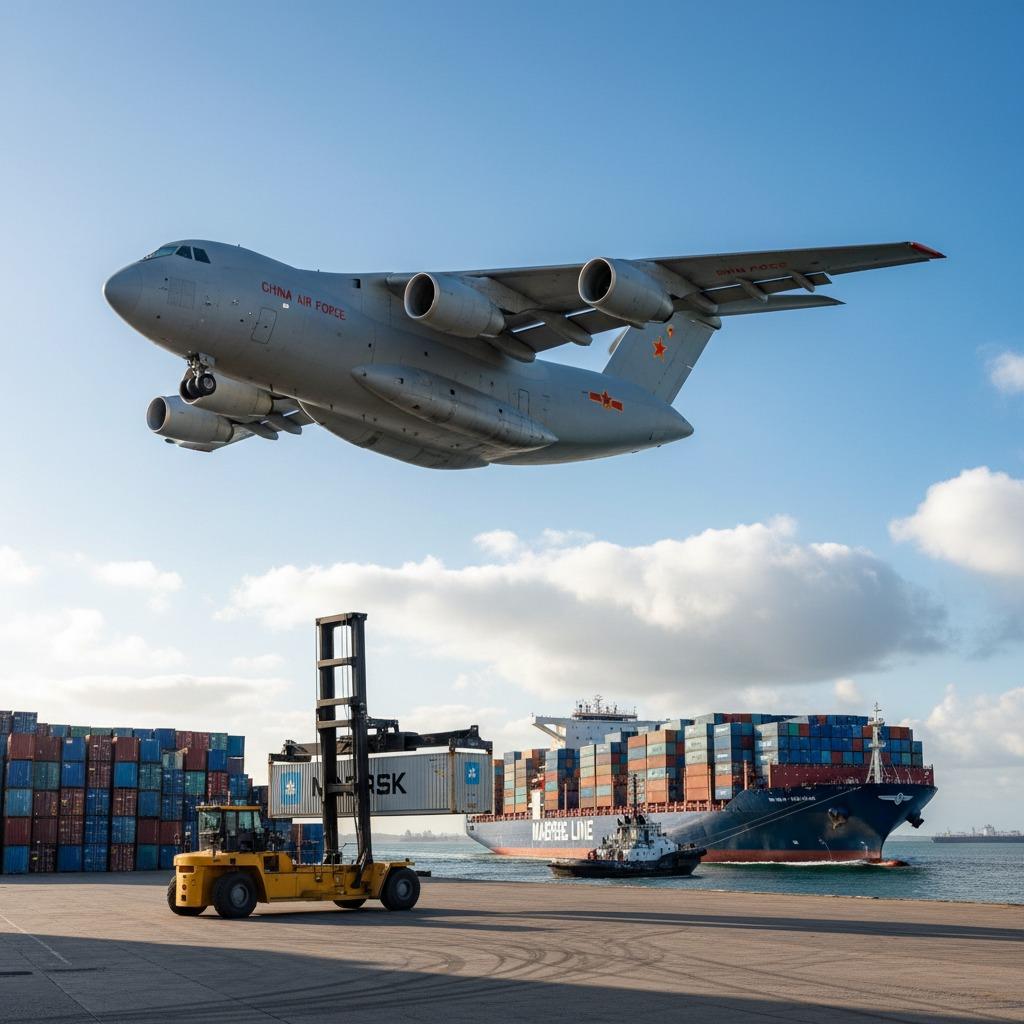
One of the most impressive advancements in logistics is the heavy-duty transport aircraft designed for strategic airlift. This powerhouse aircraft exemplifies efficiency and robustness, with a sleek fuselage that accommodates large payloads such as military supplies, vehicles, and humanitarian aid. Equipped with four powerful turbofan engines mounted on high wings, it delivers optimal thrust for long-range flights, even in challenging weather. Its payload capacity allows for immense loads over extensive distances, making it indispensable for global missions. The aircraft's range supports uninterrupted operations to remote areas, while its versatile landing gear ensures reliable delivery on rugged terrains. Additionally, the minimalist gray finish and national markings highlight its professional role in advanced aerospace logistics, marking a new era in air transport precision and power.
Container Reach Stackers: Enhancing Port and Warehouse Logistics
In maritime and storage logistics, the container reach stacker stands out as a cutting-edge tool for seamless operations in busy ports and facilities. This machine, paired with durable shipping containers from brands like Maersk, optimizes intermodal transport across road, rail, and sea. Featuring powerful hydraulic mechanics, it enables precise lifting and stacking, reducing turnaround times for loading and unloading. With exceptional vertical reach, it maximizes space in dense storage areas, while compact mobility and reinforced counterweights ensure safety and stability. The low-emission engines align with sustainable logistics practices, minimizing environmental impact. From maritime hubs to warehouses, this synergy of machinery and containers streamlines supply chains, handling goods across continents with efficiency and reliability.
Ultra-Large Container Vessels: Powering Global Sea Logistics
Sea-based logistics reaches new heights with ultra-large container vessels like those from Maersk Line, transforming international trade into a precise and powerful operation. These ships boast massive scale, with a clean silhouette in signature light blue and thousands of stacked containers forming a structured grid. The design emphasizes efficiency, allowing enormous volumes of goods— from electronics to industrial materials—to traverse global routes in single voyages. Elevated bridges provide commanding visibility, while modular container layouts enable fast loading and route planning at major ports. The broad hull and deep cargo volume ensure stability and endurance on transoceanic journeys, supported by twin exhaust towers for balanced performance. Even tugboats in port operations underscore the complete maritime ecosystem, combining deep-sea capacity with precise handling. This vessel represents refined logistics: massive capacity, disciplined engineering, and strong global connectivity.
The Future of Logistics: Integration and Innovation
As logistics evolves, integration of air, sea, and ground technologies promises even greater efficiency. Combining heavy-duty aircraft for rapid deployment, reach stackers for port handling, and ultra-large vessels for bulk transport creates a robust supply chain network. Statistics show that optimized logistics can cut costs by up to 15% and reduce delivery times significantly, according to industry reports from organizations like the International Air Transport Association. Insights from recent operations highlight how these tools adapt to diverse needs, from military precision to eco-friendly commerce. With ongoing innovations in aerodynamics, hydraulics, and sustainable engines, the future of logistics points toward smarter, greener, and more resilient systems. Businesses leveraging these advancements will not only meet demands but also drive economic growth in an increasingly globalized market.





