
The Imperative for Revolutionizing Logistics in Today's Global Economy
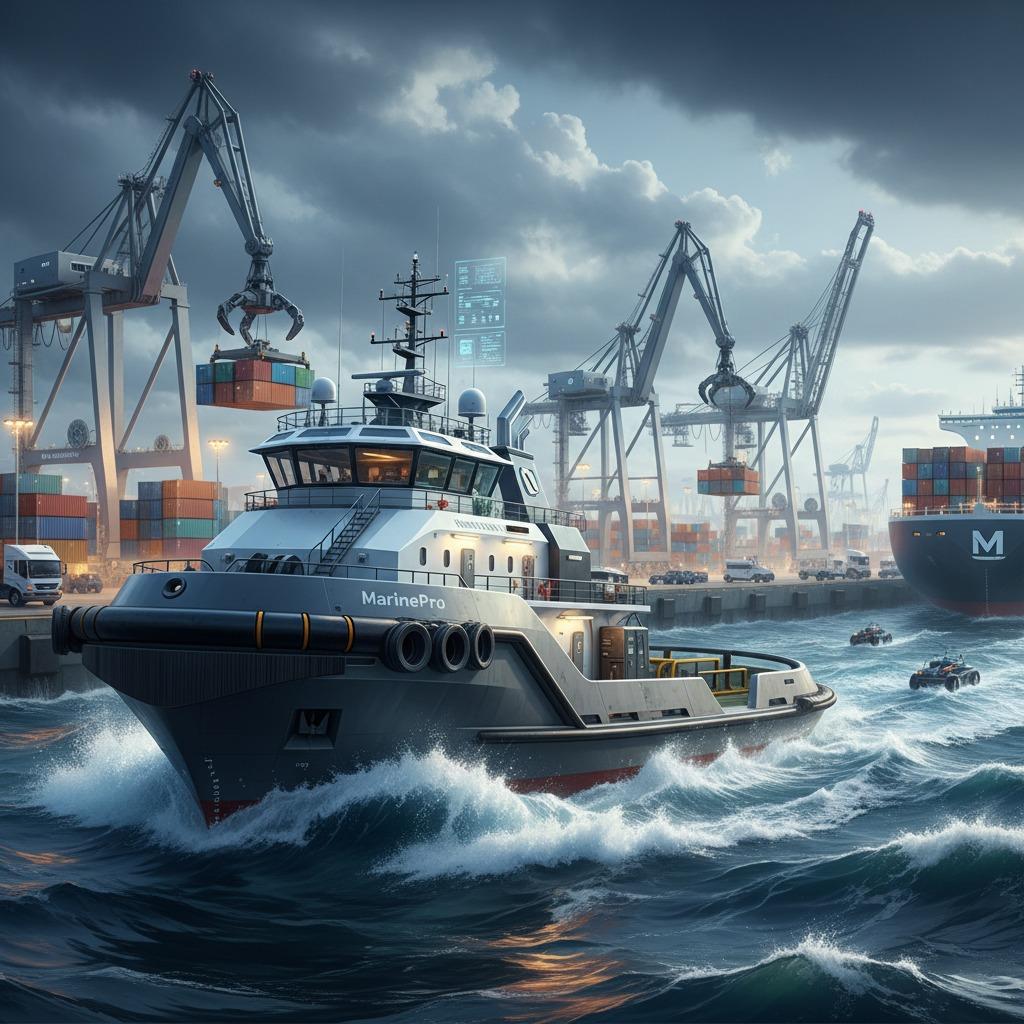
In the fast-paced world of international trade, logistics stands as the backbone of economic vitality. As someone deeply invested in maritime and industrial innovation, I firmly believe that without robust logistics systems, global supply chains would crumble under the weight of inefficiency and delays. The MarinePro Tug Vessel, for instance, exemplifies how targeted advancements can transform port operations, ensuring that freight moves seamlessly from docks to destinations. This isn't just about moving goods; it's about fostering reliability in an unpredictable world. I argue that investing in such logistics innovations isn't optional—it's essential for businesses aiming to thrive amid rising demands and environmental pressures.
Human-Machine Synergy: The Future of Logistics Efficiency
Logistics demands more than machinery; it requires a harmonious blend of human ingenuity and automated precision. Drawing from my observations in industrial settings, the interconnected gears and ergonomic worker designs in modern automation systems highlight a critical stance: pure automation without human oversight leads to costly errors. Consider how workers interacting with gear-driven mechanisms optimize material handling in warehousing and logistics. This synergy boosts productivity while prioritizing safety, a point I emphasize because neglecting it invites operational hazards. In my view, companies that prioritize this balance, like those integrating advanced load management tools, will outpace competitors stuck in outdated, siloed approaches. Logistics, when viewed through this lens, becomes a testament to collaborative excellence rather than mechanical dominance.
Sustainable Containers: Redefining Logistics for a Greener Tomorrow
The revolutionized shipping container system marks a pivotal shift in logistics, one that I passionately advocate for in the face of escalating climate concerns. These ISO-compliant containers, with their corrosion-resistant steel and modular color coding, aren't mere transport vessels—they're engineered for endurance and versatility across trucks, ships, and trains. I contend that traditional logistics practices, burdened by wasteful materials, are unsustainable and shortsighted. Features like waterproof finishes and enhanced payload capacities ensure goods arrive intact, minimizing losses that plague global trade. Moreover, their eco-friendly design allows upcycling into storage units post-use, aligning logistics with environmental stewardship. Businesses ignoring this evolution risk obsolescence; those embracing it, however, position themselves as leaders in responsible commerce.
Why Logistics Innovation Demands Immediate Action
Reflecting on the broader implications, logistics transcends mere transportation—it's the artery of modern industry. From the MarinePro Tug Vessel's towing prowess in turbulent seas to the orchestrated efficiency of automation ecosystems, every element underscores my conviction that innovation is non-negotiable. In warehousing and manufacturing, where goods flow like clockwork, delays can cascade into millions in losses. I urge industry leaders to adopt these technologies not as luxuries but as imperatives for resilience. The vibrant, stackable containers further illustrate how logistics can enhance visibility and safety, even in low-light conditions. Ultimately, in an era of disrupted supply chains, mastering logistics means securing not just goods, but the future of global trade itself. By championing these advancements, we don't just move forward; we redefine what's possible.





