
Revolutionizing Modern Logistics: An In-Depth Look at Advanced Warehouse Systems
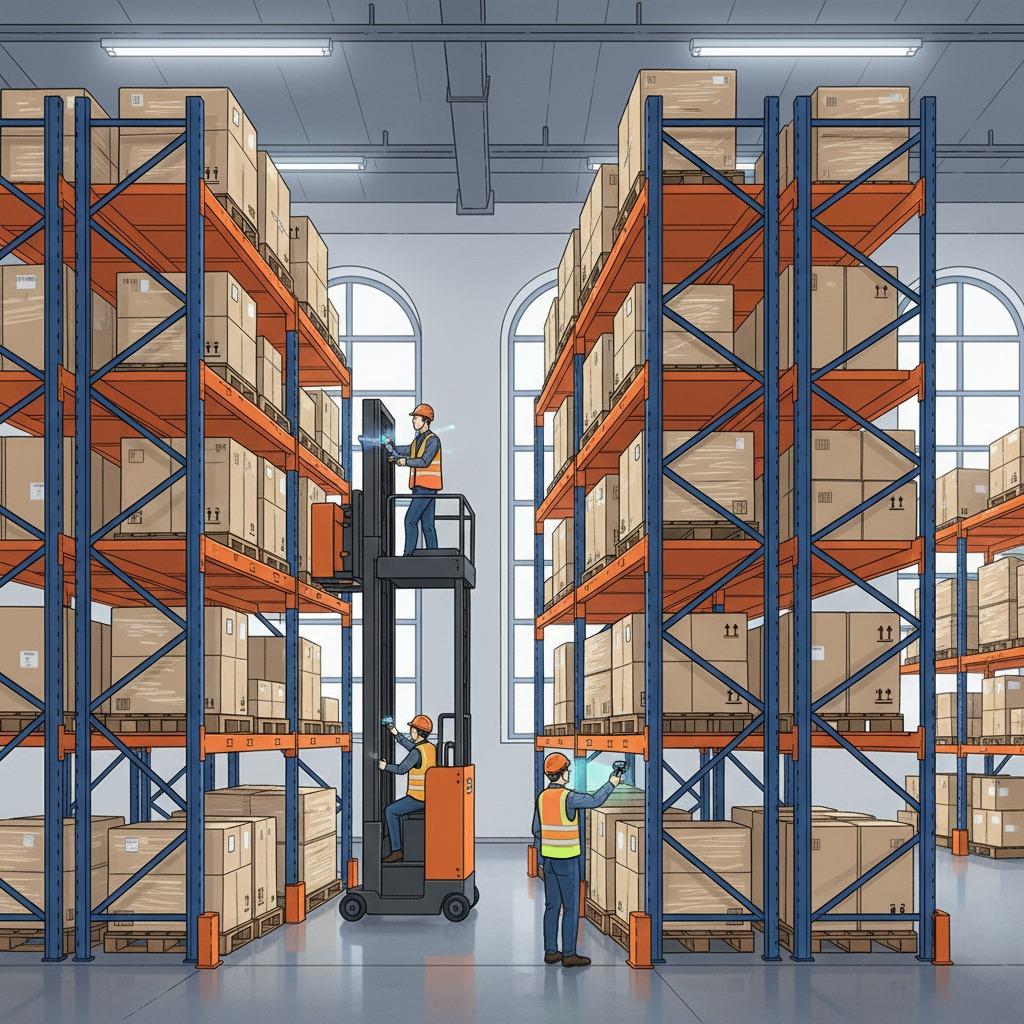
Logistics forms the backbone of efficient business operations, enabling seamless movement and storage of goods across various industries. In today's fast-paced world, innovative solutions are essential to optimize supply chains and reduce operational bottlenecks. This article delves into the technical intricacies of state-of-the-art warehouse management systems, focusing on durable shelving, optimized storage, and material handling equipment that enhance overall logistics performance.
Heavy-Duty Shelving Units: Engineering for Durability and Capacity
At the core of effective logistics are heavy-duty shelving units constructed from high-strength steel beams. These racks are engineered to support substantial load-bearing capacities, often exceeding 1,000 kilograms per level, making them suitable for both bulky industrial items and fragile electronics. The design incorporates bolted connections and cross-bracing for superior stability, preventing sway during high-traffic warehouse activities. Visibility is enhanced by the bright orange and blue color scheme, which aids in quick identification and reduces picking errors by up to 30%. From a technical standpoint, the modular assembly allows for customization—shelves can be adjusted in 50mm increments to accommodate varying item heights, ensuring maximal space utilization without compromising structural integrity. In logistics hubs for retail and e-commerce, this setup minimizes downtime and supports just-in-time inventory practices, directly impacting cost savings and delivery speeds.
Optimized Storage and Material Handling: Streamlining Workflow
Optimized storage in logistics involves uniform box arrangements across multi-level shelving, leveraging vertical space to increase capacity by 40-50% compared to traditional layouts. Each level features reinforced platforms with anti-slip coatings to secure loads, while integrated labeling systems use RFID tags for real-time tracking. This technical integration with warehouse management software (WMS) enables automated inventory counts, reducing human error and accelerating retrieval processes. Complementing this is efficient material handling via agile forklifts equipped with hydraulic lifts and electric motors for precise maneuvering in confined spaces. These forklifts boast a turning radius under 2 meters and lifting heights up to 6 meters, powered by lithium-ion batteries that offer 8-hour operational cycles with minimal recharge times. In manufacturing logistics, such systems facilitate seamless integration with conveyor belts, automating the transfer of goods and boosting throughput rates. Safety features like proximity sensors and overload protection ensure compliance with ISO 45001 standards, mitigating risks in dynamic environments.
Illuminated Workspaces and Safety Protocols in Logistics
An illuminated workspace is crucial for logistics efficiency, where energy-efficient LED fixtures provide 500-800 lux illumination across the facility, reducing eye strain and improving accuracy in order fulfillment. These lights are zoned for motion activation, cutting energy use by 60% while maintaining sustainability goals aligned with LEED certifications. Safety in logistics is paramount, with each storage box featuring clear handling labels and barcoded markings for hazard identification. The shelving's built-in reinforcements, including seismic anchoring for earthquake-prone areas, adhere to rigorous standards like those from the Occupational Safety and Health Administration (OSHA). This comprehensive approach not only prevents mishaps but also extends equipment lifespan through corrosion-resistant coatings on steel components.
Advanced Container Handling: Precision in Global Trade Logistics
Expanding beyond warehouses, logistics in global trade relies on robust container handling machines that utilize advanced hydraulic systems for lifting and stacking shipping containers. These machines, often branded for major carriers like Maersk, feature extendable arms with a reach of 15-20 meters and load capacities up to 45 tons. The hydraulic pistons operate at pressures of 200-250 bar, enabling smooth vertical stacking in ports with minimal ground clearance requirements. Ergonomic operator cabins include joystick controls and 360-degree visibility via cameras, reducing fatigue during extended shifts. In technical terms, the system's programmable logic controllers (PLCs) automate sequences for precise placement, integrating with GPS for real-time tracking in distribution hubs. This innovation optimizes workflow in high-volume logistics centers, handling diverse cargo from perishables to electronics with enhanced security features like tamper-evident seals.
Railway Locomotives: Powering Sustainable Logistics Networks
Logistics extends to rail transportation, where modern locomotives redefine efficiency with high-performance engines delivering 4,000-6,000 horsepower. These diesel-electric hybrids incorporate turbocharged systems and regenerative braking to cut emissions by 25%, supporting eco-friendly freight hauling over long distances. The aerodynamic design reduces drag coefficients to 0.25, improving fuel efficiency by 15% on rugged terrains. Robust construction includes reinforced undercarriages made from high-tensile steel, capable of navigating gradients up to 3% and extreme climates from -40°C to 50°C. Expandable modules allow for hauling multiple cars, with coupling mechanisms ensuring secure connections at speeds of 100 km/h. The operator cab features advanced human-machine interfaces (HMIs) with predictive maintenance alerts, enhancing reliability in logistics networks worldwide. This technical prowess makes locomotives indispensable for bulk cargo logistics, bridging remote suppliers to urban markets with precision and power.
In summary, from warehouse innovations to global transport solutions, logistics continues to evolve through cutting-edge engineering, driving businesses toward greater scalability and sustainability.





