
Revolutionizing Logistics with Cutting-Edge Port and Maritime Innovations
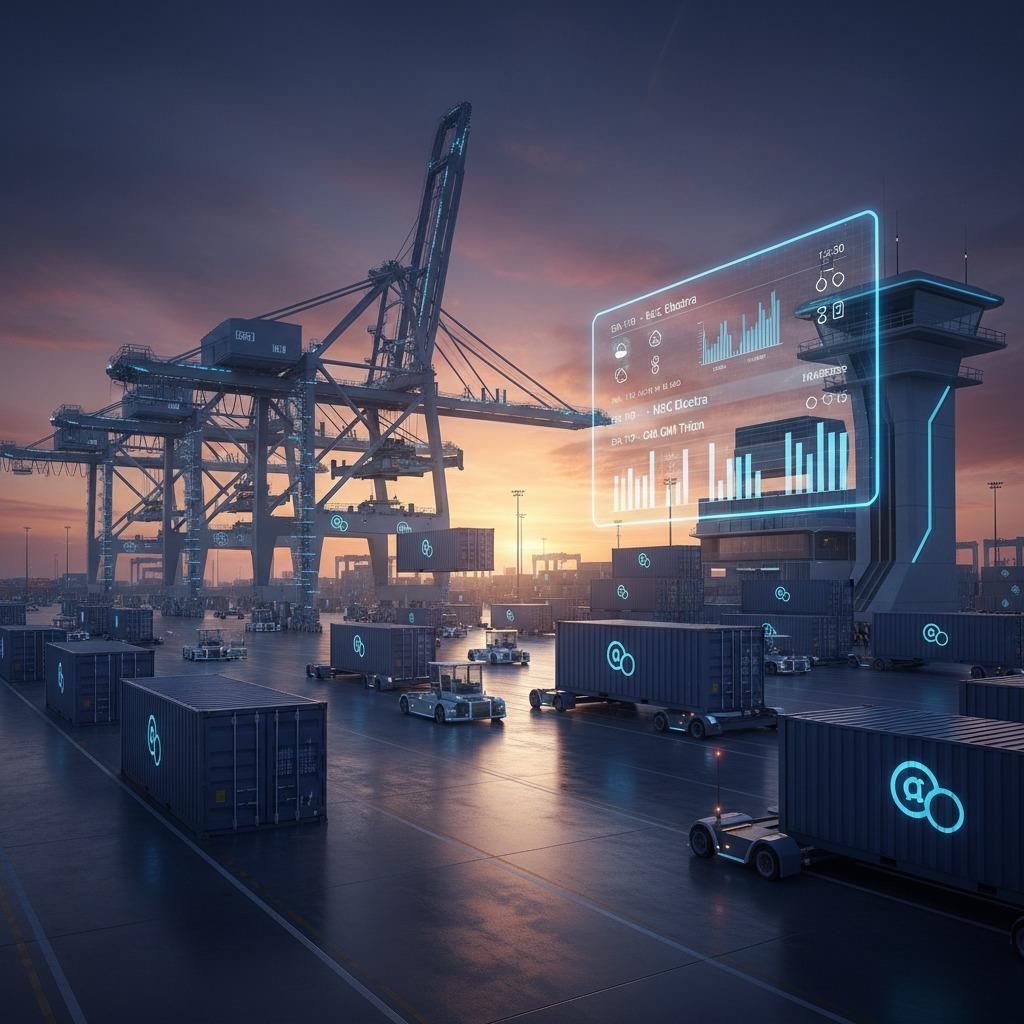
In the fast-paced world of logistics, efficiency and precision are paramount to driving global trade forward. Logistics forms the backbone of modern commerce, ensuring that goods move seamlessly from origin to destination. This article delves into the technical intricacies of advanced logistics systems, focusing on port operations, container management, and maritime vessels that are transforming the industry. By integrating AI, IoT, and automation, these innovations address the complexities of high-throughput demands in bustling ports worldwide.
Advanced Port Logistics and Container-Management Systems
The core of contemporary logistics lies in sophisticated port management systems designed to optimize every facet of cargo handling. Consider a state-of-the-art platform that employs AI-enabled predictive analytics for ship scheduling. This technology analyzes historical data, weather patterns, and traffic volumes to forecast arrival times with remarkable accuracy, reducing idle times for vessels by up to 30%. Integrated IoT sensors embedded in containers provide real-time tracking, monitoring variables such as temperature, humidity, and location via GPS. These sensors communicate through secure networks, allowing logistics managers to receive instant alerts on potential issues like delays or environmental deviations.
Automation plays a pivotal role in crane operations within this logistics ecosystem. Electrically powered cranes, guided by computer vision algorithms, execute precise loading and unloading sequences. For instance, machine learning models process 3D imaging from overhead cameras to identify container types and stack them optimally, minimizing space usage and enhancing safety. Centralized data dashboards aggregate this information, offering visualizations of inventory levels, throughput rates, and multi-modal transport coordination. In a typical setup, this involves synchronizing maritime arrivals with rail and truck departures, using APIs to interface with external systems for seamless handoffs. Sustainability is embedded in the design, with algorithms optimizing routes to cut fuel consumption by promoting electric tugs and low-emission handling equipment, thereby reducing the carbon footprint of port activities.
Technical Features of Modern Maritime Vessels in Logistics
Complementing these systems are versatile dock-side vessels engineered for industrial precision in logistics tasks. These ships feature robust hulls constructed from high-tensile steel alloys, capable of withstanding the rigors of heavy cargo transport while maintaining hydrodynamic efficiency. The propulsion system typically includes twin diesel-electric engines, delivering up to 5,000 horsepower for reliable thrust in congested harbors. Navigation gear, such as ECDIS (Electronic Chart Display and Information System) and AIS (Automatic Identification System), ensures collision avoidance through radar integration and satellite positioning, with redundancy protocols for failover in adverse conditions.
On-deck logistics enhancements include modular cargo securing systems using automated twist locks that engage via hydraulic actuators, speeding up loading times by 40% compared to manual methods. Bright LED lighting arrays, rated IP67 for weather resistance, provide 360-degree illumination for nighttime operations, reducing human error in low-visibility scenarios. Communication suites with VHF radios, satellite links, and 5G connectivity enable real-time coordination with port control towers and crane operators. For container handling, the vessel's deck interfaces directly with shore-based infrastructure, supporting roll-on/roll-off mechanisms that align with automated gantry cranes. This integration is crucial for logistics chains, as it minimizes transfer times and supports just-in-time delivery models essential for global supply networks.
Integrating Airline Innovations into Broader Logistics Strategies
While maritime logistics dominates cargo volume, air freight plays a critical role in time-sensitive logistics segments. The new airline fleet design exemplifies how aesthetics and engineering converge to enhance aerial logistics. Featuring a striking blue fuselage with red accents and gradient detailing, the aircraft's livery not only boosts brand visibility but also incorporates radar-absorbent materials for reduced drag, improving fuel efficiency by 15%. Powered by twin jet engines with composite fan blades and advanced turbine cooling, these powerplants achieve thrust-to-weight ratios exceeding 5:1, enabling rapid climbs and efficient cruising at Mach 0.85.
In logistics applications, the aircraft's cargo hold is optimized with reinforced flooring and quick-release partitions, accommodating palletized goods up to 50 tons. Avionics systems include flight management computers that interface with ground logistics software, allowing predictive maintenance via onboard diagnostics and real-time cargo monitoring through embedded sensors. This connectivity ensures that air logistics segments align with sea and land operations, creating a unified supply chain. For international routes, the design's aerodynamic curves reduce turbulence, enhancing payload stability and cutting delivery times for perishable items. Overall, these technical advancements in air, sea, and port logistics underscore a future where interconnected systems drive unprecedented efficiency and reliability.
By leveraging these innovations, companies can navigate the complexities of global logistics with confidence, ensuring scalable operations that adapt to evolving trade demands.





