
What is Logistics and Why Does It Matter?
Logistics is the backbone of global trade, encompassing the planning, execution, and control of the movement and storage of goods, services, and information from origin to consumption. In today's interconnected world, effective logistics ensures that products reach consumers efficiently, reducing costs and enhancing customer satisfaction. Whether you're a business owner shipping internationally or a consumer expecting timely deliveries, understanding logistics is crucial for navigating supply chain challenges.
How Do Aviation and Maritime Modes Integrate in Logistics?
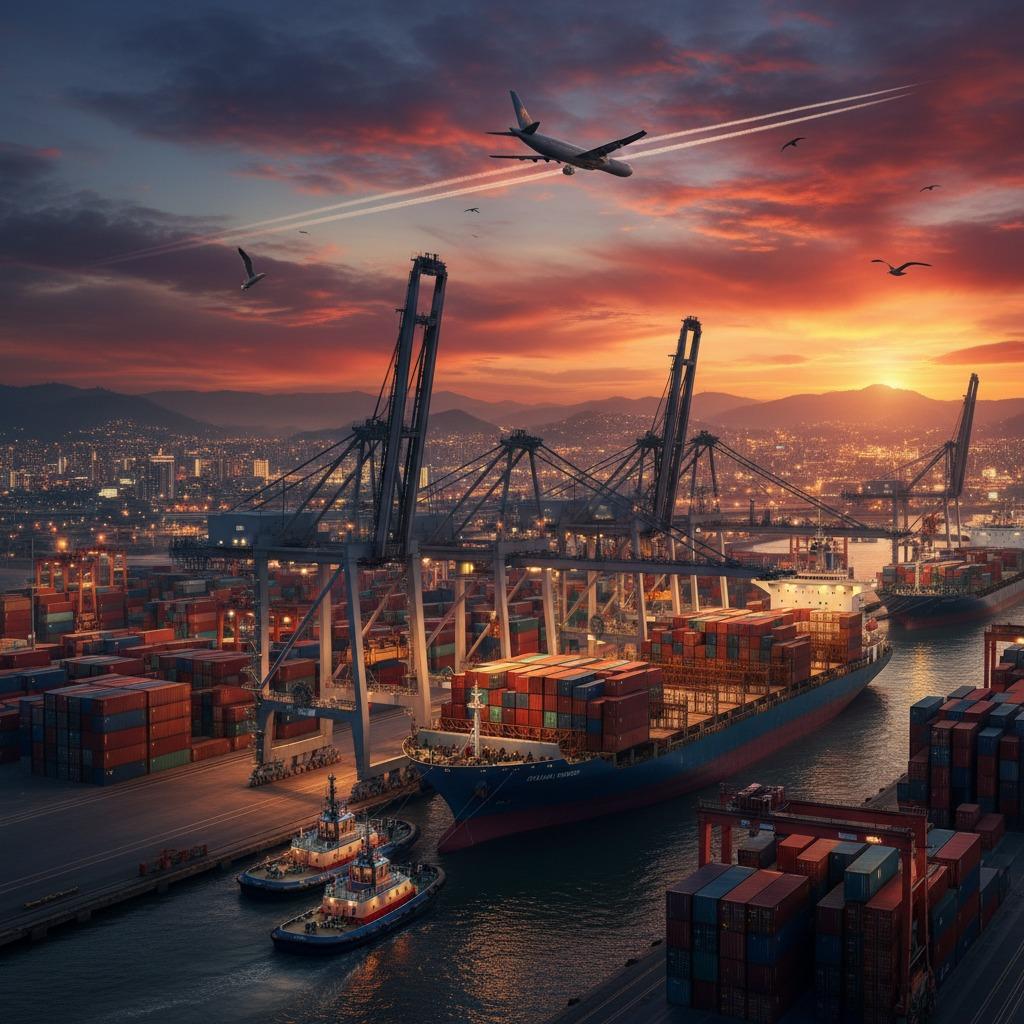
Aviation and maritime transport form a seamless union in modern logistics, combining speed with capacity for optimal global distribution. For instance, state-of-the-art commercial aircraft handle urgent, high-value shipments, soaring above bustling ports to deliver goods swiftly while minimizing environmental impact through efficient fuel technology. Below, maritime logistics takes over with towering cranes loading cargo containers onto majestic ships, supported by agile tugboats for precise maneuvering. This integration, often highlighted in innovative scenes of aircraft over ports at sunset, symbolizes the harmony between air and sea, ensuring a flawless supply chain ecosystem that balances speed, efficiency, and sustainability.
What Role Does Intermodal Transportation Play in Logistics?
Intermodal transportation is a key strategy in logistics, allowing seamless transfers between air, sea, road, and rail without handling the freight itself. Picture a cutting-edge intermodal terminal where warehouses with multiple loading docks facilitate quick transfers to trucks and trains, while aircraft take flight overhead for express deliveries and cargo ships dock nearby for bulk maritime logistics. This hub optimizes efficiency through real-time tracking and advanced systems, supporting global businesses in achieving precise supply chain goals. By coordinating these modes, logistics providers reduce delays and costs, making international trade more reliable.
How Does Automation Enhance Maritime Logistics?
Automation is revolutionizing maritime logistics, with systems like the SmartPort Automation transforming ports into efficient, precise operations. Robotic cranes equipped with AI-driven software, sensors, and cameras handle container loading and unloading with unmatched accuracy and safety. Autonomous trucks then transport these containers across the port, dynamically adjusting routes to avoid congestion and boost throughput. Environmentally, these innovations power operations with renewable energy, cutting emissions and aligning with sustainability goals. In logistics, such automation ensures faster turnaround times, lower operational costs, and safer working conditions, paving the way for the future of shipping.
What Are Common Challenges in Global Logistics?
Global logistics faces challenges like supply chain disruptions, regulatory compliance, and fluctuating fuel prices, but innovative solutions mitigate these issues. For example, integrating aviation for time-sensitive cargo and maritime for cost-effective bulk transport helps balance speed and economy. Real-time tracking in intermodal terminals addresses visibility gaps, while automation in ports reduces human error and enhances scalability. Businesses must also prioritize eco-friendly practices, such as fuel-efficient aircraft and low-emission ships, to meet environmental regulations and consumer demands for sustainable logistics.
How Can Businesses Optimize Their Logistics Strategies?
To optimize logistics, companies should adopt integrated systems that leverage multiple transport modes and cutting-edge technologies. Start by assessing needs—use aviation for perishables or high-value items, maritime for voluminous goods, and intermodal hubs for efficient handoffs. Implementing automation, like SmartPort systems, streamlines operations and cuts costs. Partnering with reliable providers ensures robust coordination, from port cranes to autonomous vehicles. Ultimately, a well-orchestrated logistics strategy not only boosts efficiency but also fosters resilience in a dynamic global market, driving long-term success.





