
What is Logistics and Why Does It Matter?
Logistics is the backbone of global trade and supply chain management, ensuring that goods move efficiently from origin to destination. It encompasses planning, implementing, and controlling the flow of goods, services, and information. In today's interconnected world, effective logistics minimizes costs, reduces delays, and enhances customer satisfaction. Whether it's shipping containers across oceans or airlifting supplies to remote areas, logistics integrates transportation, warehousing, and inventory management to keep economies running smoothly.
How Do Heavy Transport Aircraft Contribute to Logistics?
Heavy transport aircraft, like the advanced China Air Force model, play a crucial role in logistics by enabling rapid deployment of large cargo over long distances. These aircraft feature massive cargo capacity, allowing them to carry vehicles, machinery, and humanitarian supplies. Equipped with quad turbofan engines, they offer powerful thrust and fuel efficiency, ideal for operations in challenging environments. Their sturdy design and advanced avionics ensure reliability, making them versatile for military, disaster relief, and strategic airlifts. In logistics, such aircraft reduce transit times compared to sea routes, providing speed when urgency is key.
For instance, during humanitarian missions, these planes can deliver essential aid to disaster zones quickly. Their reinforced structure supports operations on rugged terrains, while tactical communication systems enhance coordination. Businesses and governments rely on this logistics capability to maintain supply chains resilient against disruptions.
What Role Do Container Handlers Play in Port Logistics?
In port and intermodal freight yards, container handlers like high-performance reach stackers are indispensable for logistics efficiency. These machines lift and stack full-size shipping containers with precision, optimizing space in dense environments. Featuring telescopic booms and top-mounted spreaders, they handle standard ISO containers securely, enabling fast transfers to trucks or rail. The robust chassis with heavy-duty tires ensures stability on uneven surfaces, supporting high-throughput operations in seaports and warehouses.
Logistics in ports demands speed and safety, and these handlers deliver by reducing handling errors through elevated cabins with excellent visibility. They integrate seamlessly into multimodal systems, facilitating container relocation and stacking. For companies like Maersk, such equipment boosts yard productivity, turning chaotic freight hubs into streamlined logistics platforms that support global commerce without interruption.
How Do Ultra-Large Container Vessels Enhance Global Logistics?
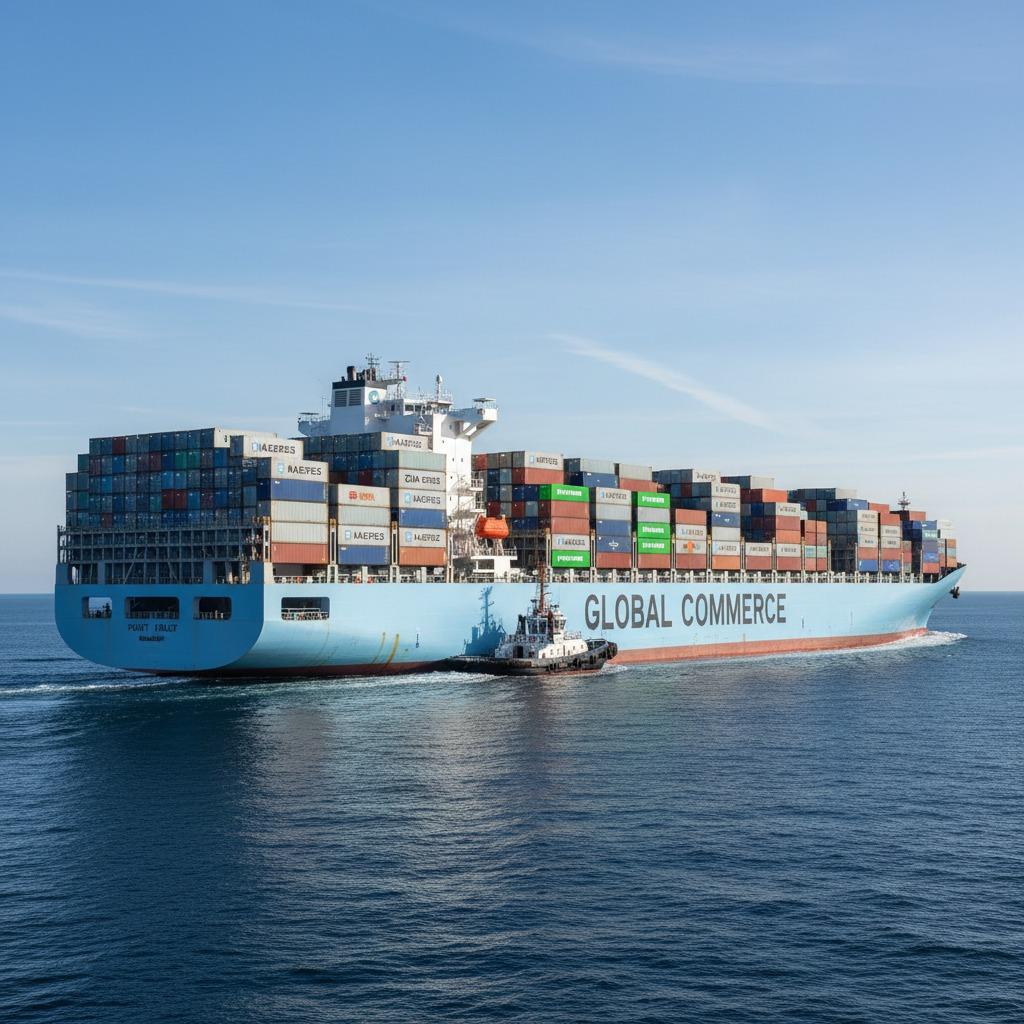
Ultra-large container vessels, such as those from Maersk Line, redefine logistics at sea by transporting massive volumes of goods across continents. These ships, with their ocean-blue hulls and towering decks stacked with containers, maximize cargo efficiency through optimized layouts and advanced navigation. Dual funnels and propulsion systems provide the power for long-haul voyages, while the elevated bridge ensures safe passage through international corridors.
In logistics, these vessels are vital for high-volume shipping, supporting supply chains in retail, manufacturing, and e-commerce. They handle route planning and port turnarounds effectively, often assisted by tugboats for precise maneuvering. The visual scale of stacked containers highlights their capacity, making them a cornerstone of cost-effective, reliable ocean freight. By integrating with terminal handlers, they create a cohesive logistics network that keeps global trade flowing.
What Are Common Challenges in Logistics and How to Overcome Them?
Logistics faces challenges like supply chain disruptions, regulatory hurdles, and environmental pressures. Delays from weather or geopolitical issues can halt operations, but diversified transportation modes—combining air, sea, and ground—mitigate risks. For example, using heavy aircraft for urgent deliveries complements slower but cheaper vessel shipments.
Technology integration, such as IoT for tracking and AI for route optimization, addresses inefficiencies. In ports, automated container handlers reduce human error and speed up processes. Sustainability is another concern; modern logistics equipment, like fuel-efficient turbofan engines and eco-friendly vessels, lowers emissions. Companies overcome these by investing in versatile assets and skilled teams, ensuring robust logistics that adapt to demands.
Future Trends in Logistics: What to Expect
The future of logistics points toward automation, sustainability, and digitalization. Autonomous vehicles and drones will enhance last-mile delivery, while blockchain improves transparency in supply chains. Heavy transport innovations, like next-gen aircraft and electric container handlers, promise greener operations. As global trade grows, logistics will evolve to handle increased volumes with minimal environmental impact, driven by tools that blend power, precision, and intelligence.
In summary, from aircraft to vessels and handlers, logistics thrives on specialized equipment that ensures seamless movement of goods worldwide.





