
Understanding the Logistics Landscape: Innovations in Modern Supply Chain Management
In the world of logistics, efficiency and innovation are paramount to keeping global trade flowing smoothly. Logistics encompasses the intricate processes of planning, implementing, and controlling the movement and storage of goods, services, and information from origin to consumption. At the heart of this dynamic field lies a commitment to optimizing every step, from maritime ports to aerial transport, ensuring that businesses can meet demands with precision and speed. As we delve into the technical aspects, it's clear that advancements in logistics are transforming how industries operate, reducing costs, and enhancing sustainability.
The Role of Advanced Container Ports in Logistics Optimization
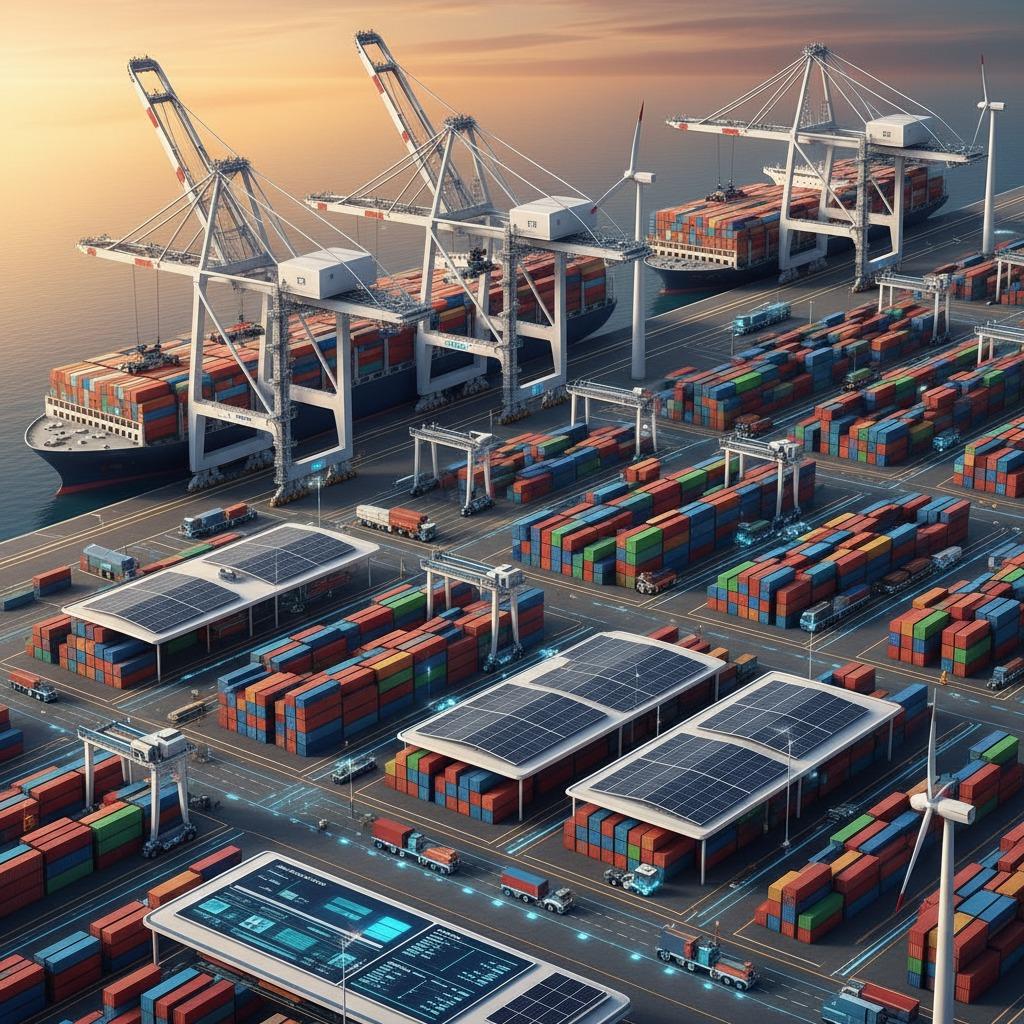
Logistics in modern container ports represents a pinnacle of engineering and automation. These expansive facilities are equipped with state-of-the-art gantry cranes that utilize hydraulic systems and computerized controls to lift containers weighing up to 40 tons with pinpoint accuracy. The infrastructure includes deep-water berths designed to accommodate vessels with drafts exceeding 15 meters, allowing for the simultaneous docking of multiple mega-ships. Terminal operating systems (TOS) integrate real-time data analytics, RFID tracking, and AI-driven predictive maintenance to streamline cargo handling. For instance, automated guided vehicles (AGVs) navigate the port yard using laser guidance and GPS, minimizing human error and achieving throughput rates of over 30 moves per hour per crane. This technical synergy not only accelerates logistics operations but also incorporates green technologies like solar-powered lighting and electric cranes, cutting emissions by up to 50% compared to traditional setups. In essence, these ports serve as the backbone of logistics, bridging sea and land transport networks seamlessly.
Integrating Aviation Logistics for Global Connectivity
Aviation plays a crucial role in high-speed logistics, particularly for time-sensitive cargo. Consider the technical marvel of a dual-engine aircraft optimized for freight transport: its aerodynamics feature winglets that reduce drag by 5-7%, improving fuel efficiency to as low as 0.5 gallons per ton-mile. The cargo hold is engineered with reinforced flooring capable of supporting pallet loads up to 10 tons, equipped with climate control systems maintaining temperatures from -20°C to +25°C for perishable goods. Navigation relies on advanced avionics, including inertial reference systems (IRS) and satellite-based augmentation systems (SBAS) for precision routing, ensuring compliance with international airspace regulations. In logistics scenarios, such aircraft facilitate just-in-time delivery, with ramp loading times reduced to under 30 minutes through automated conveyor integrations. This aerial dimension of logistics complements ground and sea routes, creating a multimodal network that enhances overall supply chain resilience against disruptions like weather or geopolitical events.
Maritime Vessels and Crane Systems: Precision in Port Logistics
At the core of maritime logistics are robust shipping vessels paired with sophisticated crane mechanisms. A typical container ship in this ecosystem boasts a deadweight tonnage (DWT) of 100,000 tons, with hull designs incorporating bulbous bows to minimize wave resistance and boost speed to 25 knots. The onboard logistics management system uses IoT sensors to monitor container conditions in real-time, alerting crews to anomalies like humidity spikes via integrated dashboards. Complementing this, dockside cranes employ spreader beams with twist-lock mechanisms for secure attachment, powered by variable frequency drives (VFDs) that optimize energy use during lifts. In evening operations, enhanced LED lighting and thermal imaging cameras ensure visibility and safety, with anti-sway algorithms in crane software preventing load oscillations for faster cycles—often achieving 35 lifts per hour. These technical elements underscore the precision required in logistics, where even minor inefficiencies can cascade into significant delays. By focusing on durability and automation, such systems not only handle diverse cargo but also adapt to evolving demands like oversized renewable energy components.
The Future of Logistics: Sustainability and Technological Integration
Looking ahead, logistics is evolving toward fully integrated, sustainable ecosystems. Emerging technologies like blockchain enable tamper-proof tracking across the supply chain, while 5G networks facilitate ultra-low latency communications between vessels, ports, and aircraft. In technical terms, this means adopting machine learning models for demand forecasting, reducing inventory holding costs by 20-30%. Ports are increasingly implementing shore power connections, allowing ships to shut down auxiliary engines and draw electricity from the grid, slashing NOx emissions by 90%. For aviation logistics, hybrid-electric propulsion systems are on the horizon, promising further fuel savings. Ultimately, the fusion of these innovations ensures that logistics remains agile, eco-conscious, and capable of supporting global commerce in an era of rapid change.





