
Understanding Logistics: The Backbone of Modern Supply Chains
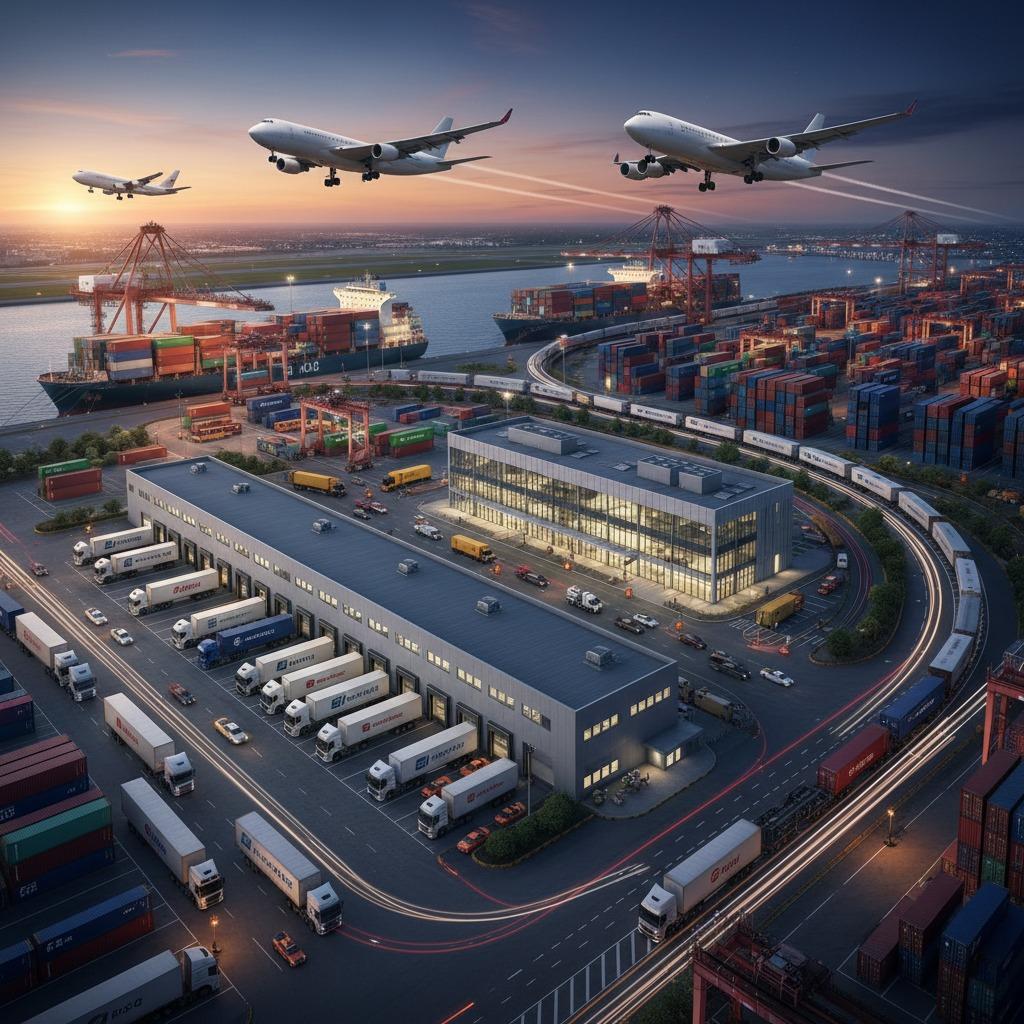
The world of logistics encompasses the intricate planning, execution, and control of the movement and storage of goods, services, and information from origin to consumption. As businesses strive for efficiency in an increasingly globalized economy, logistics stands as a critical pillar, integrating various technologies and processes to ensure seamless operations. In this article, we delve into the technical aspects of logistics, exploring how modern systems like advanced racking, material handling equipment, and intelligent transport solutions optimize warehouse and supply chain performance.
Modern Racking Systems in Logistics
At the heart of efficient logistics lies the modern racking system, designed to maximize storage capacity while ensuring accessibility and safety. These systems feature durable steel frames that support adjustable shelving, allowing for customization based on inventory needs. Engineered to handle heavy loads across multiple levels, they utilize vertical space effectively, reducing the footprint required on warehouse floors. In logistics operations, this translates to higher throughput rates, as goods can be stored densely without compromising retrieval speed. For instance, the integration of modular components enables quick reconfiguration for seasonal demands, a key technical advantage in dynamic logistics environments. Safety features, such as reinforced beams and anti-collapse mechanisms, further enhance reliability, minimizing downtime in high-volume settings.
High-Speed Material Handling Equipment for Streamlined Logistics
Advancing logistics efficiency requires sophisticated material handling equipment, such as electric forklifts equipped with autonomous navigation software. These machines operate on battery-powered systems that deliver zero-emission performance, aligning with sustainable logistics practices. Technically, their stabilizing technology includes gyroscopic sensors and load-balancing hydraulics, ensuring precise maneuvering even under heavy payloads. In warehouse logistics, autonomous features allow for programmed routes that integrate with inventory management software, reducing human error and accelerating picking processes. Complementing these are container handlers with telescopic booms and powerful hydraulics, capable of stacking large shipping units with pinpoint accuracy. Their reinforced chassis withstands the rigors of port operations, supporting logistics workflows that demand both speed and durability. Energy-efficient designs, including regenerative braking, further optimize operational costs in continuous logistics cycles.
Warehouse Lighting and Eco-Friendly Packaging in Logistics
Effective lighting is a technical cornerstone of logistics, where strategically placed LED systems provide uniform illumination across aisles, enhancing visibility for tasks like inventory checks and packing. These lights incorporate motion sensors and dimming capabilities, achieving energy savings of up to 70% compared to traditional fixtures, which is crucial for 24/7 logistics operations. In parallel, eco-friendly packaging solutions, such as recyclable cardboard boxes, integrate into logistics by reducing waste and complying with environmental regulations. These materials are engineered for durability, with reinforced edges that protect goods during transit, while their lightweight nature lowers transportation fuel consumption. In logistics planning, adopting such packaging streamlines sorting and reduces contamination risks, fostering a greener supply chain.
Safety, Ergonomics, and Advanced Rail Logistics
Safety in logistics is paramount, with wide aisle designs and ergonomic controls in equipment like forklifts preventing accidents and boosting productivity. Technical implementations include collision avoidance systems using LiDAR and AI algorithms, which predict and mitigate hazards in real-time. Extending beyond warehouses, heavy-duty locomotives revolutionize rail logistics with hybrid diesel-electric powertrains that switch seamlessly between electrified and non-electrified tracks. These locomotives feature advanced cooling systems with ventilated panels to maintain performance during extended hauls, and AI-driven diagnostics for predictive maintenance. Their robust alloy construction handles mountainous terrains, enabling efficient freight movement over challenging routes. In logistics, this versatility supports high-towing capacities, optimizing the transport of bulk goods and reducing overall logistics costs through reliable, emission-controlled operations.
Integrating Technology for Future-Proof Logistics
The future of logistics hinges on integrating these elements into cohesive systems, where IoT sensors monitor inventory in real-time, syncing with logistics software for automated dispatching. This technical synergy not only enhances scalability for e-commerce and large suppliers but also ensures adaptability to market fluctuations. By leveraging such innovations, logistics operations achieve unparalleled efficiency, sustainability, and reliability, positioning businesses at the forefront of global trade.





